
Why did I get a notice of a class action settlement? If you have received a class action lawsuit settlement notice, we’ve got you covered with the answer to the above question here.
What Is a Class Action Settlement Notice?
A class action settlement notice is a formal communication sent to individuals who may be eligible to participate in a class action lawsuit settlement. (Rule 23)
This notice is a critical legal document, designed to inform potential class members about the existence of a settlement, the nature of the claims, their rights, and the actions they can take in response.
Definition and Importance of Class Action Notices
A class action is a lawsuit brought on behalf of a group of people who have suffered similar harm from the same defendant, such as a corporation accused of deceptive business practices or a defective product.
When such a lawsuit reaches a proposed settlement, the court requires that all potential class members be notified.
The notice ensures transparency, provides affected individuals with the opportunity to participate, object, or opt out, and upholds due process. (Federal Rule of Civil Procedure; Rule 23(c)(2) and Rule 23(e))
Key Components of a Settlement Notice
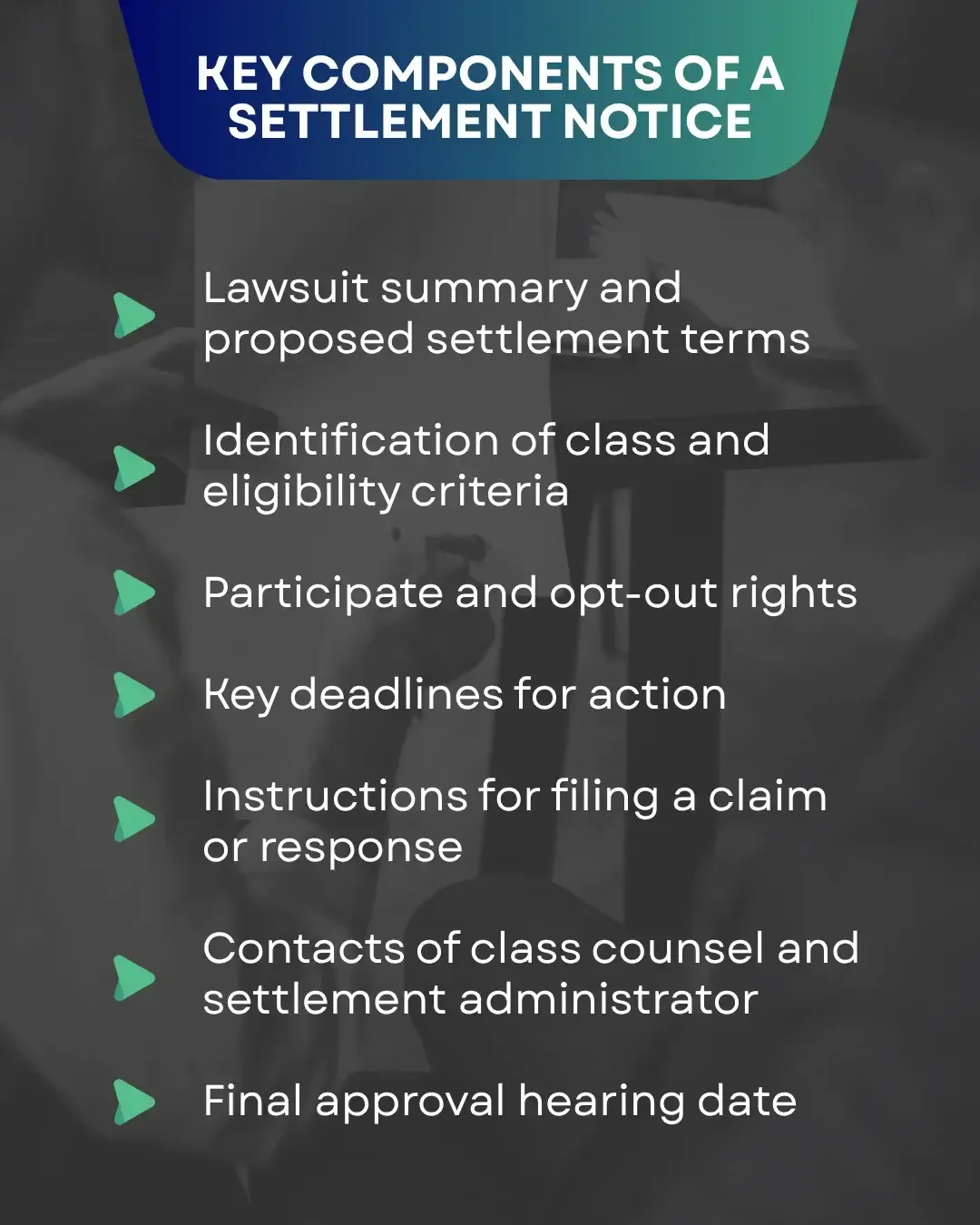
As per Rule 23(c)(2)(B) of the Federal Rules of Civil Procedure (FRCP), a typical classaction settlement notice must include:
- A summary of the lawsuit and the proposed settlement terms
- Identification of the class and eligibility criteria
- Explanation of legal rights and options (participate, opt out, object)
- Key deadlines for action
- Instructions for filing a claim or response
- Contact information for class counsel and the settlementadministrator
- Information on the final approval hearing date
The notice must be written in plain language and distributed in a manner likely to reach all class members, such as by mail, email, or social media, depending on the circumstances.
Legal Implications of Receiving a Notice
Receiving a class action settlement notice means you may have legal rights that could be affected by the outcome of the lawsuit.
If you do nothing, you might automatically be included in the class and bound by the settlement terms, including any release of claims against the defendant. This is true for Rule 23(b)(3) cases with opt-out rights. However, in non-opt out classes (e.g. Rule 23(b)(1) or (b)(2)), individuals don’t always have a choice.
The notice is not an indication that you are being sued; rather, it is a court-mandated communication to inform you of your potential rights and options.
Reasons for Receiving a Notice of Class Action Settlement
1. How Your Information Was Obtained
Your information may have been obtained from records held by the defendant, such as customer databases, employment records, or transaction histories.
Settlement administrators may also use third-party data sources or public records toidentifypotential class members. The goal is to ensure that all individuals who may have been affected by the alleged conduct are notified.
2. Potential Eligibility as a Class Member
You received a notice because you may potentially meet the criteria of the class defined in the lawsuit.
For example, you may havepurchaseda specific product during a particular time frame,worked for a company under certainconditions, or had your data compromised in a breach. The notice will specify the class definition and the corresponding time.
3. Common Scenarios Leading to Notification
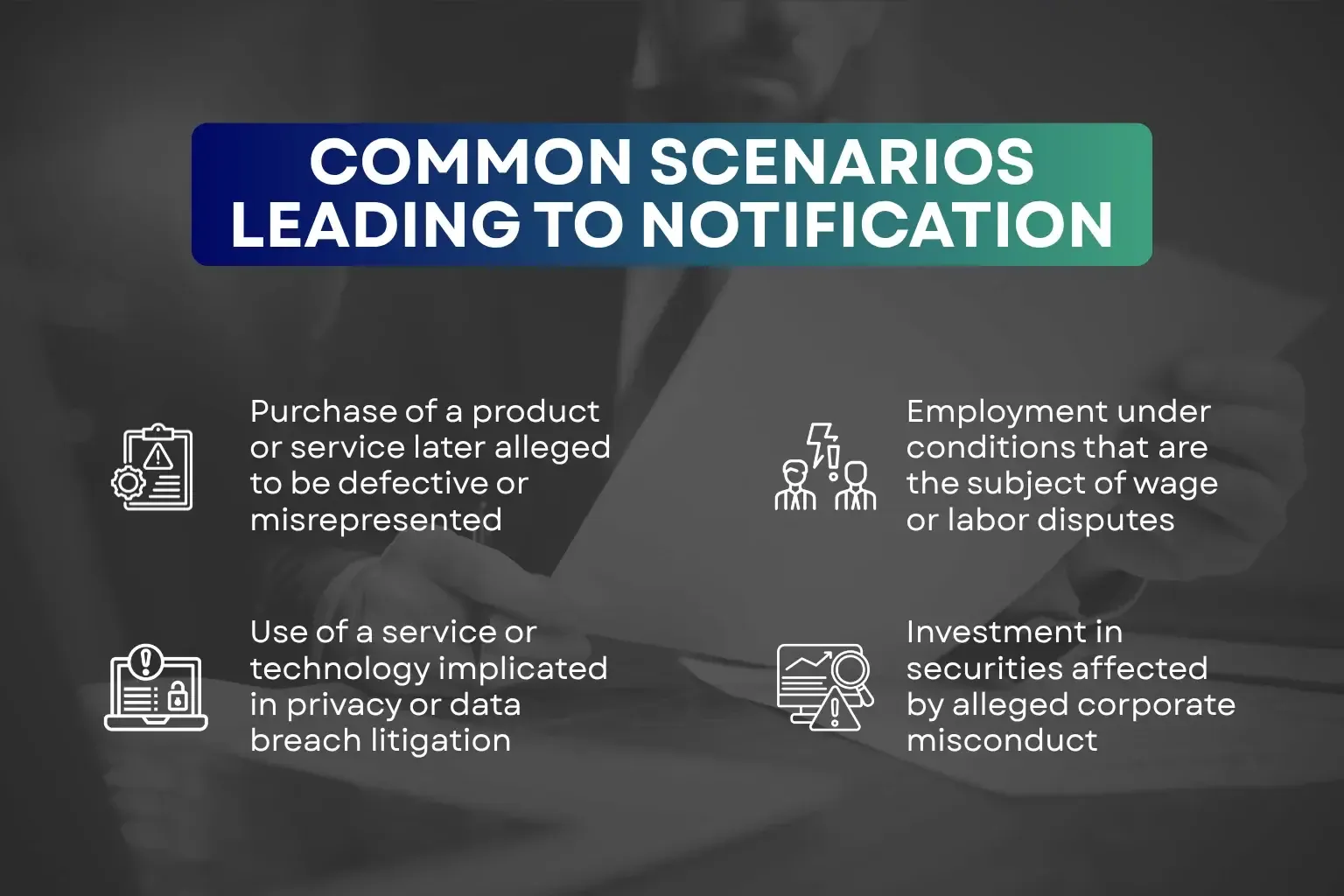
As per the Rule 23 of the FRCP, the following scenarios are likely to invite a notification for a class action lawsuitsettlement:
- Purchase of a product or service later alleged to be defective or misrepresented
- Employment under conditions that are the subject of wage or labor disputes
- Use of a service or technology implicated in privacy or data breach litigation
- Investment in securities affected by alleged corporate misconduct
In each scenario, the notice is sent to inform you of your rights and possible compensation.
Your Rights and Options After Receiving a Settlement Notice
1. Understanding Your Legal Rights as a Class Member
As a potential class member, you have several necessary rights:
- The right to share in any settlementproceedsif you qualify andsubmita valid claim(Rule23(c)(3))
- The right to opt out if you prefer to pursue your lawsuit or not be bound by the settlement(Rule 23(b)(3))
- The right to object to the settlement terms if you believe they are unfair or inadequate(Rule23(e)(5))
- The right to do nothing, which may result in automatic inclusion in the class and waiver of future claims(Rule23(e), 23(d)(1)(B))
2. Choosing to Participate or Opt Out
To participate, you typically need to submit a claim form by the stated deadline.
Opting out requires sending a written request to the settlement administrator, following the instructions in the notice (Rule23(c)(2)(B)(v), 23(e)(4)).
Opting out preserves your right to sue the defendant independently, but you forfeit any settlement benefits.
3. How to Object to the Settlement Terms
If you believe the settlement is unfair, you can file a written objection with the court. The notice will provide instructions and deadlines forsubmittingobjections. The court will consider all objections before granting final approval of the settlement(Rule23(e)(5)).
Critical Dates and Actions to Consider
1. Key Deadlines for Response and Participation
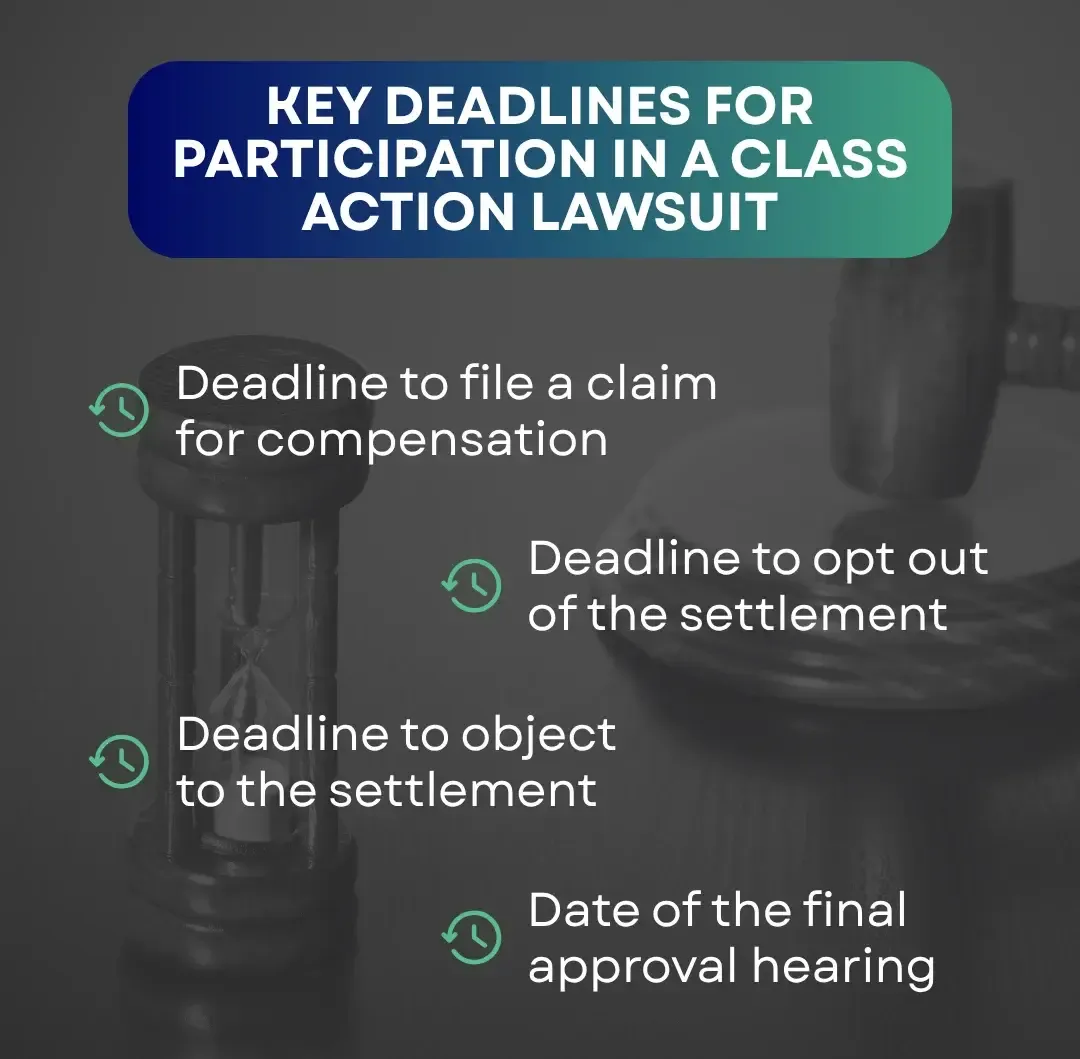
The notice will highlight vital dates, including:
- Deadline to file a claim for compensation
- Deadline to opt out of the settlement
- Deadline to object to the settlement
- Date of the final approval hearing
Missing these deadlines can affect your rights and ability to receive compensation.
2. How to File a Claim or Response
You must follow the instructions in the notice to file a claim, opt out, or object.
This often involves submitting forms online, by mail, or in person. The settlement administrator may provide a website with additional resources and downloadable forms.
3. What Happens if You Miss Important Dates?
If you miss the deadline to file a claim, you may forfeit your right to compensation.
Missing the opt-out deadline means the settlement terms will bind you, and you cannot pursue separate legal action for the same claims. (Rule23(c)(2)(B)(vi))
Decoding the Settlement Amount and Distribution Process
1. Factors Influencing Settlement Amounts
Settlement amounts are influenced by several factors, as per Rule 23 of the FRCP, including:
- The size of the class and the total settlement fund
- The severity and type of alleged harm
- The strength of the legal claims
- Deductions for attorneys’ fees, administrative costs, and incentive awards for class representatives
2. How Settlements Are Distributed Among Class Members
After court approval, the settlement fund is distributed per the plan outlined in the notice. This may involve equal payments to all claimants or pro rata distribution based on the degree of harm or loss suffered.
The administrator handles the claims process and distribution, ensuring compliance with the court’s orders.
3. Understanding Compensation and Tax Implications
Compensation from class action settlements is generally considered taxable income (IRC 61), though certain types of damages (such as for physical injury) may be treated differently (IRC § 104(a)(2)).
The notice may address tax implications; however, you should consult a tax professional for advice tailored to your specific situation.
Seeking Legal Advice Regarding Class Action Settlements
When to Consult with a Legal Expert
You should consider consulting a lawyer if:
- You are unsure whether you qualify as a class member
- You are considering opting out to pursue your lawsuit.
- You believe the settlement is unfair or inadequate.
- You have questions about the tax treatment of your compensation.
Finding a Lawyer Specializing in Class Action Cases
Look for attorneys with experience in class action litigation. Experienced law firms specializing in class action lawsuits, such as Levi & Korsinsky, can provide guidance and legal support for individuals involved in class action lawsuits.
At Levi & Korsinsky, LLP, we specialise in legal counsel for investor class action lawsuits, representing shareholders who have suffered financial losses due to securities fraud, corporate misconduct, and deceptive investment practices.
With over 80 collective years of experience, our experienced attorneys are on hand to provide you with the support and legal expertise you need to maximise your recovery.
Benefits of Professional Guidance in Settlement Claims
A legal expert can help you:
- Evaluate your rights and options
- Navigate complex settlement procedures.
- Maximize your potential compensation.
- Avoid pitfalls such as missing deadlines or waiving essential rights.
Next Steps After Receiving a Class Action Lawsuit Settlement Notice
Receiving a notice of class action settlement means you may be eligible for compensation or other remedies due to alleged harm caused by a defendant’s conduct. The notice provides essential information about your rights, options, and the steps you must take to participate, opt out, or object. Understanding the notice and acting before deadlines ensures you can make informed decisions about your legal rights and potential compensation.
Disclaimer: The information provided in this blog is for general informational purposes only and does not constitute legal advice. Readers should not act or refrain from acting on any of the information contained in this blog without consulting a qualified legal professional. Levi & Korsinsky LLP is not responsible for any actions taken or not taken based on the information provided in this blog.