
Table of Contents
- Definition and Meaning of Securities Fraud
- Elements of Securities Fraud
- Types of Securities Fraud
- The Role of Regulatory Authorities
- Prevention, Detection and Reporting of Securities Fraud Cases
- What Are the Consequences of Securities Fraud?
- Seeking Legal Assistance
- Seeking Legal Assistance: The L&K Approach
- Begin Your Securities Fraud Litigation Journey with Us
- FAQs
Definition and Meaning of Securities Fraud
"Those who draw upon other people's money must be wholly candid regarding the facts upon which the investor's judgment is asked," Franklin D Roosevelt opined during the signing of the Securities Act of 1933 (the Securities Act).
The Securities Act laid the groundwork for agencies such as the Federal Bureau of Investigation (FBI) and the Securities and Exchange Commission (SEC) to maintain the integrity of the securities and commodities markets. Securities fraud in the United States refers to various deceptive practices that manipulate financial markets and mislead investors, significantly undermining market integrity and investor confidence.
The FBI defines securities fraud as an criminal activity, including high-yield investment fraud, Ponzi schemes, pyramid schemes, accounting fraud, advanced fee schemes, broker misconduct, pump-and-dump trading, and other similar schemes. Securities fraud is a serious white-collar crime that encompasses schemes such as insider trading, falsified corporate filings, inadequate transparency with corporate auditors, and share price manipulation.
Elements of Securities Fraud
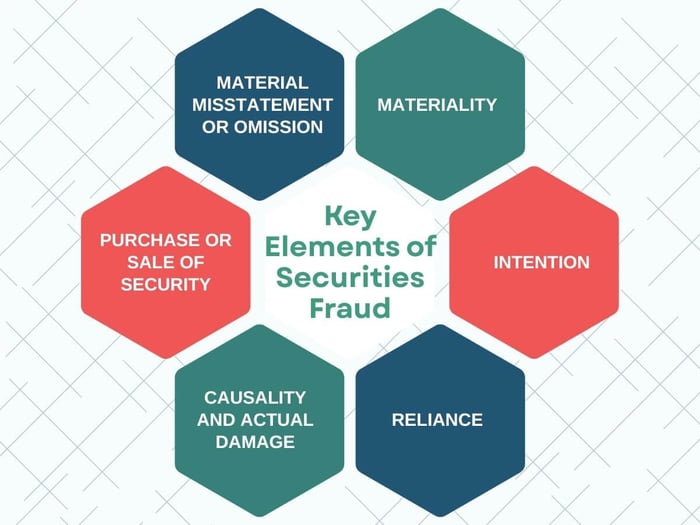
The American Bar Association (ABA) describes the various elements of securities fraud under Section 10(b) of the Securities Exchange Act of 1934 (the Exchange Act) as follows:
- Purchase or Sale of Security: Fraud connection with the purchase or sale of the security;
- Material Misstatement or Omission: The defendant provided untrue statements, data, or made omissions leading to misstatements;
- Materiality: A connection between the misrepresentation or omission and the plaintiff’s purchase or sale of a security
- Intention: An intent to deceive, manipulate, or defraud (that is, with scienter);
- Reliance: The plaintiff relied on the misstatement, false information or omission
- Causality and Actual Damage: There is a causal connection between the material misrepresentation or omission and the plaintiff’s economic loss.
This guide to understanding Securities Fraud aims to increase investor awareness about all essential elements of securities malpractice, including types of securities fraud, impact, legal recourse, and rights, as well as preventive measures to safeguard their financial interests.
Types of Securities Fraud
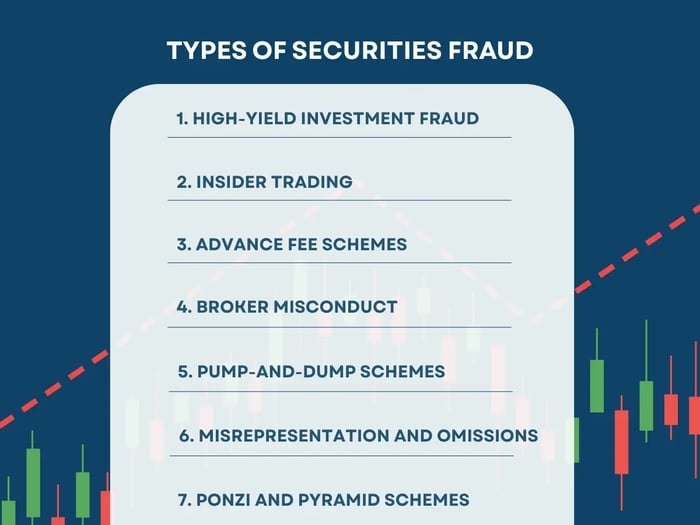
1. High-Yield Investment Fraud
High-yield investment fraud often promises abnormally high returns with little or no risk, targeting unsuspecting investors.
These schemes employ deceptive communication and offer fabricated investment products or services to deceive investors. The perpetrators may collect funds upfront and vanish, leaving investors with significant losses and no returns.
2. Insider Trading
Individuals with access to non-public, material information about a company buying or selling its securities to gain an unfair advantage. This practice violates securities laws and constitutes a breach of fiduciary duty, as it creates an uneven playing field for investors.
Company executives aware of financial statements, impending mergers, personnel changes, criminal lawsuits, or financial disclosures can trade the company's stock before the public announcement is made.
3. Advance Fee Schemes
Advance fee schemes require investors to pay a fee upfront before receiving any proceeds, money, stock, or warrants for the deal to proceed. The advance payment is a fee, tax, commission, or incidental expense that is paid in anticipation of future compensation.
These frauds typically utilize official-looking websites, emails, and escrow accounts to enhance investor confidence.
4. Broker Misconduct
Unethical or illegal behavior on the part of stockbrokers, financial advisors and brokerage firms that act against the investor's best interests. A broker can act negligently by making unsuitable recommendations that do not align with an investor's profile.
Broker misconduct includes excessive or unauthorized trading (churning), bloating commissions, over-concentrated portfolios, and poor supervision when taking corrective actions.
5. Pump-and-Dump Schemes
A pump-and-dump scheme, classified as internet fraud, involves disseminating false information about stocks to manipulate prices. It involves artificially inflating the price of a stock through the use of misleading statements or promotions.
Once the stock price reaches a certain level, the fraudsters sell their shares for a profit, causing the stock price to plummet and leaving other investors with significant losses. Aggressive marketing campaigns usually accompany Internet fraud.
6. Misrepresentation and Omissions
Misrepresentation involves providing false or misleading information regarding a company's financial status or operations. This may include omitting critical facts that investors need to make informed decisions.
Such actions can lead to inflated stock prices, resulting in substantial losses upon truthful disclosure. Misrepresentation can take various forms, including false statements in financial reports or failure to disclose relevant risks associated with an investment.
7. Ponzi and Pyramid Schemes
Ponzi schemes, named after Charles Ponzi, use funds from new investors to pay returns to earlier investors, rather than generating legitimate profits. This unsustainable model collapses when the influx of new investors slows, leading to substantial losses for those who joined later.
Pyramid schemes are similar to Ponzi schemes but typically involve recruiting new members who must pay to enter. Earnings are primarily generated from new participants rather than selling products or services. When the recruitment of new members slows down, these schemes inevitably collapse, leaving most participants with losses.
The Role of Regulatory Authorities
Rule 105-5, a regulation the SEC, is a pivotal component of securities fraud law. It prohibits any act or omission that would defraud investors in connection with the purchase or sale of a security.
The Private Securities Litigation Reform Act (PSLRA) of 1995 was formulated to reduce the burden of securities fraud litigation, deter frivolous lawsuits, and promote efficient and fair outcomes. It has had a significant impact on the interpretation of Rule 10b-5.
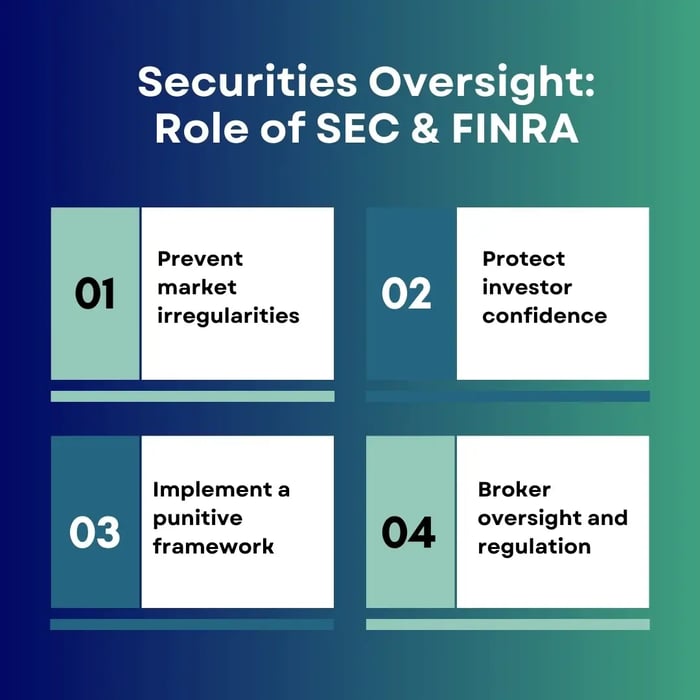
Regulatory agencies, such as the Securities and Exchange Commission (SEC) and the Financial Industry Regulatory Authority (FINRA), actively monitor trading activities and investigate suspicious behavior to maintain market integrity.
- Preventing market irregularities and fraud in publicly traded companies
- Protecting investor confidence in markets by preventing fraudulent scheme-related losses
- Creating a regulatory framework and implementing punitive action against fraudsters
- Overseeing and regulating the role of brokers in the financial and commodities markets
Prevention, Detection and Reporting of Securities Fraud Cases
Investors must conduct thorough due diligence on their investment opportunities, along with the help of qualified brokers and advisors. By regularly monitoring their investments, investors can detect securities fraud and seek proper counsel to address any resulting losses or damages. Organizations must implement best practices to prevent securities fraud, which can lead to the erosion of investor value.
Prevention
- Continuous training and internal controls
- Transparent whistleblower policies
- Stringent audits and reporting
Detection
- Surveillance programs and regulatory nets
- Anonymous whistleblower protection programs
- Inter-agency cooperation and information sharing
Reporting
- The SEC and other agencies have established clear guidelines for the anonymous and safe reporting of fraud, as well as online resources for investigating investment opportunities.
- Investors can approach qualified legal teams, such as Levi & Korsinsky (L&K), to assess the legitimacy of their claims.
What Are the Consequences of Securities Fraud?
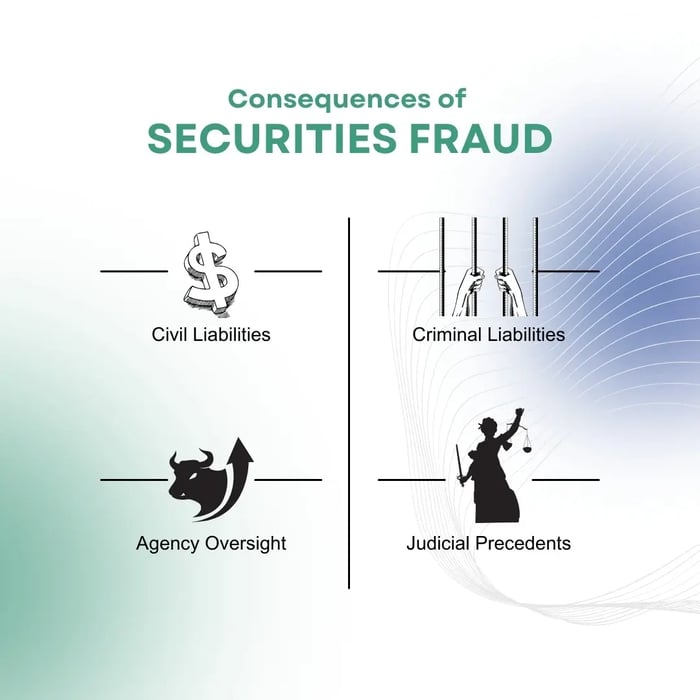
Securities fraud lawsuits can create civil liabilities for defendants, resulting in fines, penalties, and a loss of investor confidence. Securities fraud destabilizes companies, potentially leading to job losses and negatively impacting the overall health of the economy.
Long-Term Impact:
- Investor Confidence: Frauds make investors wary of future opportunities and limit market growth
- Market Disruptions: Industries on high-growth trajectories could face downturns
- Erosion of Investor Wealth: Investors often face severe economic losses that are difficult to recover from
- Business Impact: Frauds severely affect the company's ability to raise funds and grow in the future
Seeking Legal Assistance
Seeking legal recourse can seem daunting for individual investors. The role of a qualified, experienced, and persistent securities fraud legal team is paramount to achieving legal remedies.
1. Compensatory and Punitive Damages
Victims of securities fraud can claim compensatory damages for actual financial losses incurred due to fraudulent activities, aiming to restore them to their pre-fraud condition. Courts may also impose punitive damages to punish wrongdoers and deter future fraud in cases where egregious misconduct is proven.
2. Rescission and Injunctions
Another remedy available to investors is rescission, which allows them to void fraudulent transactions and recover their investments. Additionally, victims may seek injunctions to prevent further fraudulent activities by the perpetrator, thereby protecting other potential victims from similar harm.
3. Restitution Processes
Restitution processes are essential in ensuring that fraud victims receive the compensation they deserve and that perpetrators are held accountable for their actions. Restitution refers to the legal process of compensating victims for losses incurred through monetary compensation.
4. Civil Litigation and Support Services
Victims of securities fraud can pursue civil litigation to recover damages and secure restitution. This may involve filing lawsuits against perpetrators and third parties that facilitated the fraud. Key legal avenues for fraud victims include filing civil lawsuits to seek compensatory and punitive damages, submitting insurance claims for fraud, and accessing victim support services.
Seeking Legal Assistance: The L&K Approach
If you suspect securities fraud violations, Levi & Korsinsky can help you investigate potential claims by reviewing SEC filings, insider trading records, and financial disclosures. We represent the interests of aggrieved shareholders in class action and derivative litigation through the vigorous prosecution of corporations that have committed securities fraud and boards of directors who have breached their fiduciary duties. Here's how we do it:
● Market Monitoring: Our team continuously monitors financial markets and corporate news for signs of potential misconduct or irregularities. We also closely monitor company press releases for any disclosures indicating potential securities violations.
● Data Analysis: We use advanced data analytics tools to identify patterns and anomalies that may indicate securities fraud or other violations.
● Free Initial Consultation: We offer free consultations if you believe you have suffered losses due to corporate misconduct. During this meeting, our attorneys assess the validity and strength of the claim.
● Detailed Evaluation: We conduct a thorough evaluation of your case, including reviewing transaction records, account statements, and any correspondence with the company.
● Tech-Driven: We efficiently recruit lead plaintiffs for securities class actions using SNAP Trade, which provides a user-friendly interface for submitting claims and documentation.
● Efficient Recruitment: The SNAP Trade platform facilitates seamless communication between our legal team and potential lead plaintiffs, making the recruitment process more efficient and effective.
Begin Your Securities Fraud Litigation Journey with Us
At Levi & Korsinsky, LLP, we specialize in investor class action lawsuits, representing shareholders who have suffered financial losses due to securities fraud, corporate misconduct, and deceptive investment practices.
Over the past 20 years, we have successfully recovered hundreds of millions of dollars for investors, including recent settlements in the US Steel ($40 million) and Nutanix ($71 million) cases. We strive to provide you with actionable insights and navigation guidance to help you manage and mitigate losses resulting from securities fraud.
As a national law firm with decades of combined experience, our attorneys are adept in the field of securities class action litigation and are available to provide you with the legal advice and representation you need to handle your recovery.
If you suspect securities fraud has affected your financial investments, you may qualify for a class action lawsuit. Check if you are eligible at L&K's Current Class Action Lawsuits Page. Act now—deadlines apply for filing securities fraud claims.
Disclaimer:
The information provided in this blog is for general informational purposes only and does not constitute legal advice. Readers should not act or refrain from acting on any of the information contained in this blog without consulting a qualified legal professional. Levi & Korsinsky LLP is not responsible for any actions taken or not taken based on the information provided in this blog.
You Can Also Read |
FAQs
What are examples of securities fraud?
Some common examples of securities fraud (but not limited to) are high-yield investment fraud, Ponzi schemes, pyramid schemes, advanced fee schemes, broker misconduct, pump-and-dump trading, and more.
Some examples of securities fraud lawsuits from our portfolio:
- U.S. Steel Consolidated Cases ($40M settlement) -
- QuantumScape Securities Class Action ($47.5M settlement) -
- Helios and Matheson Analytics, Inc. Securities Litigation ($8.25M settlement)
- Illumina Inc. Securities Litigation ($13.85M settlement)
How long could you go to jail for securities fraud? What are the penalties for securities fraud?
In the United States, a federal securities fraud conviction can result in a maximum prison sentence of 25 years, as well as fines and restitution for victims. The actual sentence and penalties depend on the amount of financial loss for investors, the severity of the crime, and the interpretation of sentencing guidelines.
What are elements of securities fraud?
The six elements of securities fraud are as follows:
● Purchase or Sale of Security
● Material Misstatement
● Materiality
● Intention
● Reliance
● Causality and Actual Damage
Can investors recover losses from securities fraud?
Recovering losses from securities fraud lawsuits is possible, but it depends on the nature of the crime and the scale of its impact. Plaintiffs can receive compensation through various mechanisms, including disgorgement funds, receiverships, fair funds, and SEC rulings. It is essential to note that not all victims are entitled to compensation through class action lawsuits

![AppLovin Corp. (APP) Securities Class Action Lawsuit Update [March 28, 2025]](https://dropinblog.net/cdn-cgi/image/fit=scale-down,format=auto,width=700/34260815/files/featured/applovin-corp-lawsuit-update.webp)