
What is a Class Action Lawsuit?
A class action suit is a legal mechanism that allows a group of individuals with similar grievances against a defendant to file a class action lawsuit. If plaintiffs cannot pursue individual claims due to the cost or scale, a class action suit allows them to combine resources to seek more effective access to justice.
Definition
A type of lawsuit that allows a cohort of individual claimants to join forces and pursue their case as a group to seek fair compensation/justice.
This guide on How to Start Your Class Action Suit details the various stages of your case, class certification criteria, and how to seek the proper legal counsel.
The Purpose of Joining a Class Action Suit
● Class action lawsuits are more economical and practical.
● A class action lawsuit requires only one set of witnesses, experts, and exhibits, which increases efficiency in court.
● It can result in a larger pool of compensation shared among plaintiffs.
● It also leads to a fairer distribution of compensation.
● Class action settlements compel corporations to enhance their quality standards, recall defective products promptly, and refrain from engaging in false advertising.
Essential Considerations for Potential Members/Plaintiffs
Initiating a class action suit involves engaging legal representation, identifying common issues among potential class members, and gathering relevant information. A crucial phase is class certification, during which the court evaluates whether the case meets specific legal criteria outlined in the Federal Rules of Civil Procedure (“FRCP”) 23, such as numerosity and commonality. The certification process can be contentious, as defendants often challenge the appropriateness of class status, raising questions about the typicality of claims and the adequacy of representation.
Legal representation in class action suits is, therefore, vital. Attorneys who handle class action lawsuits can manage the complexities of litigation, negotiate settlements, and advocate for the interests of the class. While individual class members typically do not hire separate lawyers, selecting qualified legal counsel is critical for ensuring effective representation throughout the legal proceedings.
Compensation awarded in class actions varies and is typically distributed among class members based on the harm they suffered, with considerations for legal fees and expenses factored into the final payouts. Investor outcomes can range in the region of hundreds of millions of dollars. For example, see the recent settlements in the US Steel ($40 million) and Nutanix ($71 million) cases.
Benefits of Class Action Suits
Class action suits offer many advantages to plaintiffs seeking justice, especially when individual claims may be too small to justify separate lawsuits.
1. Access to Justice
Class actions are often the only tool for individuals to access justice, as legal costs can be prohibitive. When many individuals unite under a class action, the shared resources can make the legal process more affordable and attainable.
2. Judicial Efficiency
Class actions are vital for judicial efficiency. By consolidating numerous similar claims into a single legal proceeding, class actions can significantly reduce the burden on the court system and prevent inconsistent rulings on similar issues.
3. Cost-Effectiveness
By pooling resources, plaintiffs can share legal fees and other litigation expenses, resulting in a more equitable distribution of costs among class members. Individual payouts depend on the number of plaintiffs, the nature of the damages, and overheads such as legal fees.
4. Potential for Higher Settlements
In certain instances, class actions can lead to larger settlements than individual lawsuits. Aggregate damages can be substantial in cases involving securities fraud, defective products, and illegal governance practices.
5. Collective Strength
Class action suits provide a platform for collective strength, enabling individuals to unite against powerful and influential entities. They enhance the plaintiffs' leverage and create a more formidable challenge against those responsible for the harm suffered by the class.
Eligibility for a Class Action Lawsuit
The individual or group of individuals who initiate this type of lawsuit, known as the class representative(s), file a class action on behalf of all similarly affected individuals. To start a class action, individuals must meet specific eligibility criteria. These criteria ensure the robustness of the claims and the validity of the lawsuit:
- Existence of similar legal claims
- Ability to adequately represent the entire class of plaintiffs
- Size and jurisdiction
The choice of legal counsel is pivotal to the success of any class action lawsuit. An experienced attorney can help plaintiffs and class representatives maximize their compensation by assisting them in navigating complex legal hurdles as quickly as possible.
The Class Action Lawsuit Process
Starting a class action lawsuit requires thorough preparation to ensure the validity of claims and optimum outcomes.
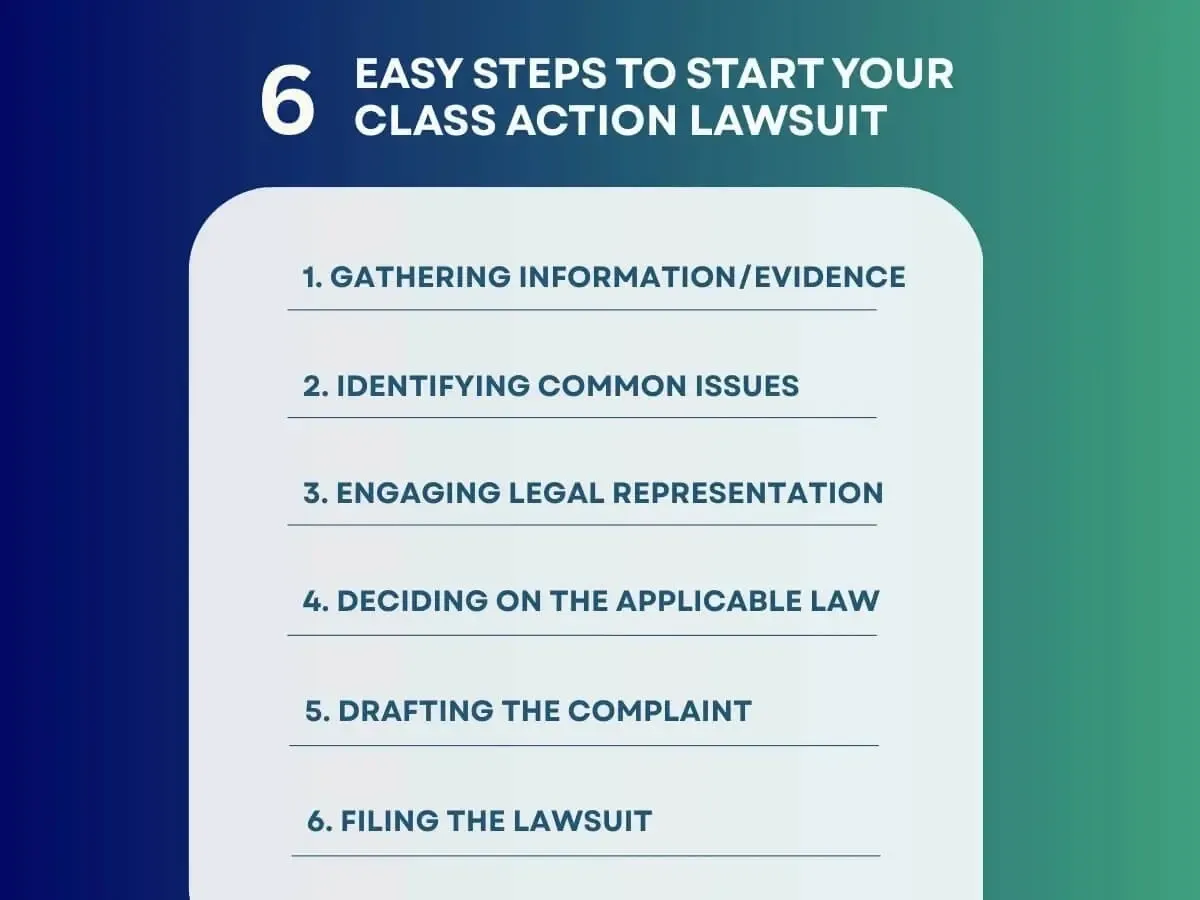
1. Gathering Information/Evidence
This stage includes speaking with potential class members to understand the nature of their grievances, researching current and past lawsuits related to the claim, and determining whether the issues at hand qualify for a class action. Conducting this due diligence is crucial as frivolous lawsuits will likely be dismissed.
2. Identifying Common Issues
This involves preparing a narrative that outlines how the harm experienced is similar across the group, establishing a strong basis for collective legal action. Identifying these commonalities is vital for demonstrating to the court that a class action is appropriate.
3. Engaging Legal Representation
Given the complexities of class action lawsuits, it is advisable to consult a lawyer or law firm specializing in this area. Legal representation simplifies the process and brings expertise to manage all aspects of the case, from filing to negotiations and trial. A seasoned attorney can offer valuable insights to the lead plaintiff and class members on the case's viability and the likelihood of obtaining class certification.
4. Deciding on the Applicable Law
Understanding the legal framework relevant to the claim involves determining which laws apply to the allegations and how they collectively affect the class members. Knowledge of the applicable law is essential for crafting a compelling legal strategy.
5. Drafting the Complaint
At this stage, your attorney will draft a formal complaint. This document outlines the facts of the case, the legal grounds for the lawsuit, and the damages sought, and defines the class of individuals covered in the suit. The complaint must identify the class members statewide or nationwide to facilitate class certification.
6. Filing the Lawsuit
The final step in the preparation process is formally filing the lawsuit in either federal or state court. This filing requests that the court certify the class action and recognize the potential class members as eligible to participate. This stage sets the foundation for the class action process and initiates the legal proceedings.
Class Certification for Class Action Lawsuits
Generally, to certify a class under Rule 23 of the FRCP, plaintiffs of the proposed class must meet the four prerequisites in Rule 23(a) and at least one of the requirements outlined in Rule 23(b).

Rule 23(a):
The proposed class must have: (1) numerosity, indicating that the class is so numerous that individual lawsuits would be impractical; (2) commonality, where class members share common questions of law or fact; (3) typicality, meaning the claims or defenses of the representative parties are typical of the claims or defenses of the class; and (4) adequacy of representation, which requires that the representative parties will fairly and adequality protect the interests of the entire class.
Rule 23(b):
A class action may be maintained if the prerequisites of Rule 23(a) are met and if: (1) prosecuting separate actions would create a risk of adjudications inconsistent with or dispositive of other class members’ claims; (2) declaratory or injunctive relief is appropriate due to the defendant’s acts as they apply to the class generally; or (3) common questions of fact or law predominate, and a class action is superior to other methods, such as individual actions.
Compensation for Class Members
Compensation in class action lawsuits can vary significantly based on the specific circumstances of each case, including the nature of the claims and the number of individuals involved in the class. The total financial compensation awarded in a class action is divided among all class members, proportional to the harm they experienced due to the defendant's actions.
The lead plaintiff may often receive additional compensation for initiating the lawsuit and representing the entire class. However, legal fees or other expenses associated with the case can reduce compensation.
Opting Out and Other Considerations
Most class action lawsuits are opt-out, meaning that the individuals expected to be covered by the litigation, known as class members, are included automatically unless they specifically request to be excluded.
Joining a class action lawsuit generally costs nothing. The appointed attorneys bear all the costs of running the legal case and, depending on the settlement, are awarded compensation for their efforts at the end of the case.
Conclusion: Why Legal Counsel Matters
Finding the right attorney for a class-action lawsuit is essential. Prospective class members should seek attorneys with proven experience in class action litigation, as the complexity and scale of these lawsuits necessitate specialized legal expertise.
Evaluating a class action attorney's track record, client testimonials, and approach to class actions can help individuals make informed decisions about representation. While the appointed attorneys represent the class, individuals may still consult with a lawyer to discuss their specific circumstances within the class action, ensuring they fully understand their rights and options.
Over the past 20 years, the team at Levi & Korsinsky has secured hundreds of millions of dollars for aggrieved shareholders and built a track record of winning high-stakes cases. Our firm has extensive experience representing investors in complex securities litigation, and our team of over 70 employees is dedicated to serving our clients. For seven years in a row, Levi & Korsinsky has ranked in ISS Securities Class Action Services' Top 50 Report as one of the top securities litigation firms in the United States.
If you suspect securities fraud has affected your financial investments, you may qualify for a class action lawsuit. Check if you are eligible at L&K's Current Class Action Lawsuits Page. Act now—deadlines apply for filing securities fraud claims!

Disclaimer:
The information provided in this blog is for general informational purposes only and does not constitute legal advice. Readers should not act or refrain from acting on any of the information contained in this blog without consulting a qualified legal professional. Levi & Korsinsky LLP is not responsible for any actions taken or not taken based on the information provided in this blog.