
Understanding Class Action Suits
A class action is a legal mechanism that allows one or more plaintiffs, collectively referred to as the "class," to sue a defendant. This approach is practical when numerous individuals share similar claims against the same entity.
To proceed as a class action in federal court, Rule 23 of the Federal Rules of Civil Procedure (“FRCP”) requires the following:
- The number of class members renders it impracticable to join them in the action (numerosity)
- The class members' claims share common questions of law or fact (commonality)
- The claims or defenses of the proposed class representatives are typical of those for the rest of the class members (typicality)
- The proposed class representatives will adequately protect the interests of the entire class (adequacy of representation)
In addition to the numerosity, commonality, typicality and adequacy of representation requirements of Rule 23(a), the federal district court must also find at least one of the following from Rule 23(b): (1) prosecuting separate actions by or against the induvial class members would create a risk of inconsistent adjudications (rulings) or that a ruling with respect to individual class members would be dispositive of other class members’ claims that would “substantially impair or impede their ability to protect their interests”; (2) declaratory or injunctive relief is appropriate due to the defendant’s acts as they apply to the class generally; or (3) common questions of fact or law predominate, and a class action is superior to other methods, such as individual actions.
To join a class action, you must meet the court's criteria for class membership. This article discusses how to join a class action, eligibility, process, benefits, drawbacks, outcomes, and what to expect when you join a class action lawsuit.
Eligibility and Participation in Class Actions
Eligibility to join a civil class action lawsuit is determined by the specific criteria established by the court for members of the class. The foundational requirement for class action participation is that the individual must have experienced harm similar to that suffered by other members of the proposed class. This "similar harm or injury" concept ensures that all members share a common grievance suitable for collective legal action.
Opt-In Versus Opt-Out Lawsuits:
Once a class action lawsuit is filed, the court may notify affected individuals with crucial information regarding their rights and options. This notification often includes details about the claims, the participation process, and deadlines for opting into or opting out of the class.
Most class action lawsuits are opt-out lawsuits which means they automatically include all eligible individuals unless they request to be excluded. Potential class members are usually given instructions for opting out when they receive notification of a class action lawsuit. Opting out usually consists of completing the opt out paperwork and returning it to the address provided by the notice before the deadline.
How to Join a Class Action Lawsuit
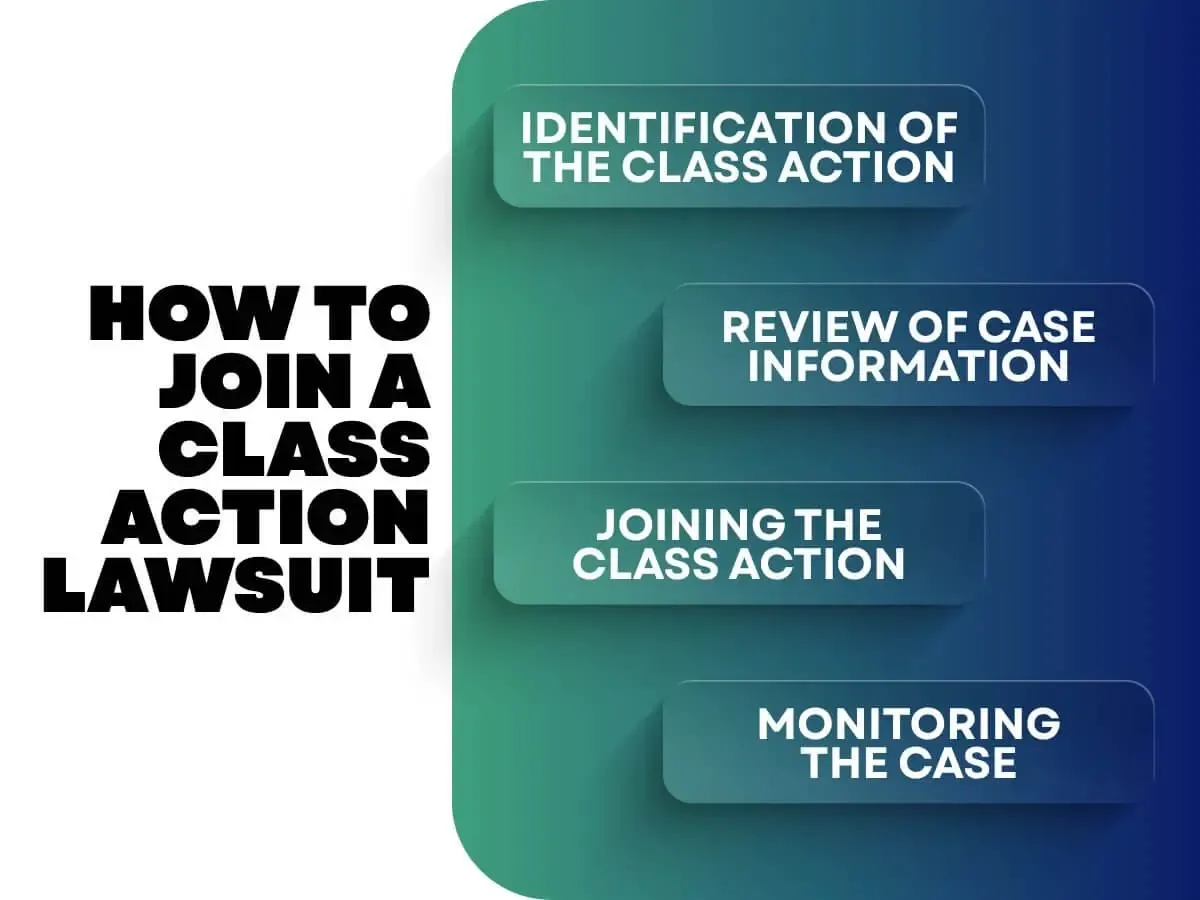
To join an active class action lawsuit, you must meet the criteria of class membership as defined by the court. After confirming eligibility, you may be included as a class member and should receive notice of pending class action litigation. Most notices are sent to potential class members by mail or email. If you missed or have not received notice but believe you are eligible to participate, you can seek legal counsel for proper guidance or search for active class actions that relate to your claim(s).
Identification of the Class Action: The first step in joining a class action is identifying a relevant case that pertains to the individual's situation. You can research ongoing lawsuits that address common grievances against a specific defendant or seek legal counsel.
Review of Case Information: Once a potential class action has been identified, individuals should review the information provided about the case, including the claims made and the participation terms. Legal firms like L&K can help individuals understand these aspects.
Joining the Class Action: If the lawsuit is an opt-out case, individuals do not need to take any action to join. Conversely, individuals must explicitly express their desire to join the lawsuit for opt-in cases, often by filling out a registration or consent form.
Monitoring the Case: Individuals should stay informed about the case's progress after joining the class action. You must monitor court communications, updates from the legal representatives, and any deadlines that might affect their participation.
Benefits and Outcomes for Class Members
Class actions enable collective redress for widespread harm, particularly in securities fraud cases where individual losses might be too small to litigate. In 2024, class action settlements exceeded $40 billion, for the third year in a row. Here are some broad benefits for plaintiffs:
Collective Recovery: Several defrauded shareholders receive compensation without bearing individual litigation costs.
Deterrence: Successful lawsuits compel organizations to act more responsibly toward governance and compliance.
Efficiency: Consolidated claims streamline court processes, avoiding redundant lawsuits.
Systemic Change: Class actions often highlight large-scale, systemic neglect issues, such as companies releasing defective products or financial institutions engaging in predatory lending practices.
Successful class action lawsuits can lead to reforms in company policies or industry regulations, compelling entities to alter harmful practices that affect a broader group of people.
Potential Drawbacks of Joining a Class Action Lawsuit
- Limited Control: Lead plaintiffs and attorneys make key decisions, leaving individual members with minimal input.
- Long Timelines: Cases often take years to resolve due to certification challenges and appeals.
- Modest Payouts: Compensation is divided among members, often resulting in small recoveries.
For example, the WorldCom securities fraud case (2002)—in which shareholders secured a $6.13 billion settlement after the company inflated assets by $11 billion—demonstrated how collective action compensates investors and deters corporate fraud.
Next Steps and Resources
If you believe you may be eligible to join a securities class action lawsuit, follow these steps:
- Identify the case through SEC filings, court documents and online portals
- Check eligibility criteria to understand if you can join a class action
- Stay informed on case updates and developments
The Role of Legal Counsel
Attorneys with experience in class action lawsuits can make your class action journey seamless and efficient. Reach out to firms with experience in securities litigation. A competent law firm like Levi & Korsinsky – recognized in ISS Securities Class Action Services' Top 50 Report for seven consecutive years – has served as lead or co-lead counsel in over 50 securities class actions, recovering $200+ million for investors in cases involving IPO misstatements, accounting fraud, and regulatory violations.
The firm combines extensive securities law knowledge with resources to navigate complex litigation, ensuring efficient recovery for investors.