
Insider trading is a term that frequently surfaces in financial news, often linked to high-profile scandals and regulatory crackdowns. What constitutes insider trading, and why does it matter? How have real-world cases shaped the laws and practices governing financial markets?
This article provides a clear, comprehensive look at insider trading, including hypothetical and real-life examples, the legal framework in the United States, consequences, and best practices for prevention and detection.
What Is Insider Trading?
Insider trading refers to buying or selling a publicly traded company’s securities based on material, non-public information.
Material information is any detail that could influence an investor’s decision to buy or sell a security, such as earnings results, merger announcements, or regulatory decisions. A trade is considered illegal if information about it is not publicly available and used for personal gain.
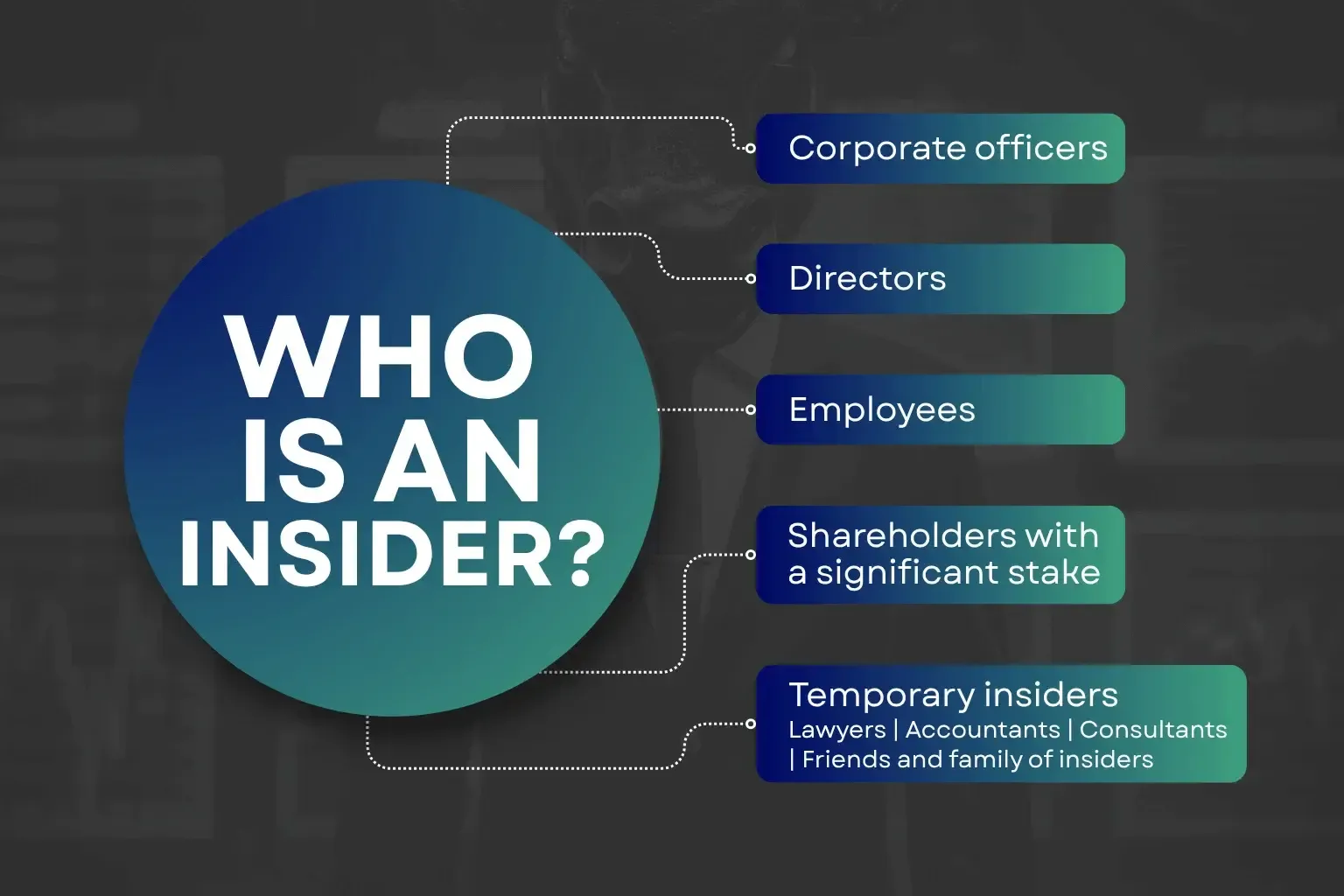
It includes corporate officers, directors, employees, significant shareholders (those owning more than 10% of a company’s securities), and anyone who obtains confidential information through a relationship of trust, such as lawyers, accountants, consultants, and friends and family of insiders.
Temporary insiders and "tippees" (those who receive tips from insiders) can also be liable if they knowingly trade on confidential information.
Why Understanding Insider Trading Matters
Investors, executives, and anyone involved in the financial markets need to recognize how insider trading happens and its legal ramifications. Illegal insider trading undermines market integrity, erodes investor confidence, and can lead to significant financial and reputational damage for individuals and organizations.
High-profile cases have led to significant regulatory reforms, shaping how markets operate.
Hypothetical Examples of Insider Trading
The following scenarios illustrate how insider trading might occur in real-world settings, helping to contextualize the concept through practical, easy-to-understand examples.
1. Corporate Executive Scenario:A company's Chief Financial Officer (CFO) discovers that the company will announce record profits in the upcoming quarter. Before this public disclosure, the CFO purchased a significant quantity of the company's stock, expecting the stock price to rise after the announcement. This situation represents a classic case of unlawful insider trading.
2. Government Employee Scenario: A government regulator learns that a pharmaceutical company's new drug will be rejected. The regulator informs a friend, who sells their stock to avoid losses before the public announcement. Both the regulator and the friend could face legal prosecution for insider trading.
3. High-Level Employee Scenario: A tech firm's senior engineer learned that their latest product failed safety tests and would be recalled. This engineer informed a family member, who then shorted the company's stock before the recall was public. Consequently, the family member profited from the stock's subsequent price decline.
4. Outsider Scenario: A consultant working on a merger for a client overhears executives discussing the deal in a public place. The consultant, not a direct employee, buys shares in the target company before the merger is announced, using information not publicly available.
5. Broader Hypothetical Scenario:A journalist receives embargoed information about a company’s bankruptcy. Instead of waiting for the news to become public, the journalist sells his holdings in the company, avoiding a loss.
These scenarios illustrate that insider trading is not restricted to top corporate executives or board members. It can involve anyone who misuses confidential, market-moving information.
Real-Life Examples of Insider Trading
The following cases are among the most notable in history, demonstrating the range and impact of insider trading on individuals, companies, and markets:
1. Martha Stewart and ImClone Systems
In 2001, Martha Stewart sold nearly 4,000 ImClone Systems shares after her broker told her that the FDA would reject the company’s cancer drug application. Stewart avoided a loss of about $45,000.
She was convicted not for insider trading but for obstruction of justice and lying to investigators. Stewart served five months in prison, and the case became a high-profile example of how insider trading investigations can ensnare even those outside the financial industry.
2. Raj Rajaratnam and Galleon Group
Raj Rajaratnam, founder of the Galleon Group hedge fund, orchestrated one of the largest insider trading schemes in U.S. history. He built a network of insiders at companies like IBM and Goldman Sachs, trading on confidential information and generating tens of millions in profits. In 2011, Rajaratnam was convicted on 14 counts of conspiracy and securities fraud and received an 11-year prison sentence.
3. Jeffrey Skilling and Enron
Jeffrey Skilling, former CEO of Enron, sold about $60 million in company stock before the public learned of Enron’s dire financial situation. His actions, part of a broader corporate fraud, included illegal insider trading.
The Enron scandal led to the Sarbanes-Oxley Act, a landmark reform of corporate governance and financial reporting standards.
4. Ivan Boesky and Wall Street
Ivan Boesky, a prominent Wall Street arbitrageur in the 1980s, made over $200 million by trading on tips about mergers and acquisitions from investment bankers and corporate insiders. His prosecution triggered a wave of investigations into illegal trading and led to significant reforms in Wall Street regulation.
5. Joseph Nacchio and Qwest Communications
Joseph Nacchio, CEO of Qwest Communications, sold millions in company stock in 2001 while knowing of the company’s deteriorating financial health, information not yet disclosed to the public. He was convicted of insider trading in 2007 and sentenced to prison, highlighting the risks for executives who misuse confidential information.
6. Brett Kennedy and Amazon
In 2017, Brett Kennedy, a former Amazon financial analyst, provided confidential earnings information to a friend. The friend traded on the tip and made over $115,000 in profits. Kennedy received $10,000 for the information. The case demonstrates how even lower-level employees can face prosecution for insider trading.
7. Rajat Gupta and Goldman Sachs
Rajat Gupta, a former board member of Goldman Sachs, leaked confidential boardroom information to Raj Rajaratnam, who traded on the tips. Gupta was convicted in 2012 and sentenced to two years in prison, underscoring that even those at the highest levels of corporate governance are not immune from prosecution.
8. Albert H. Wiggin and Chase National Bank
During the Great Depression, Albert H. Wiggin, chairman of Chase National Bank, secretly shorted his bank’s stock while publicly assuring investors of its stability. Although not prosecuted under modern insider trading laws, his actions spurred early regulatory reforms.
9. Matthew Kluger and Law Firm Leaks
Matthew Kluger, a lawyer who worked at various major law firms, leaked confidential information about mergers and acquisitions to accomplices, who traded on the tips for years. Kluger was sentenced to 12 years in prison, one of the harshest sentences for insider trading, and the case highlighted the risks for professionals with access to sensitive information.
10. Yoshiaki Murakami and Nippon Broadcasting System
Yoshiaki Murakami, a Japanese fund manager, was convicted of insider trading in 2007 after trading shares of Nippon Broadcasting System based on nonpublic information about a pending tender offer. He received a suspended prison sentence and a fine, showing that insider trading is a global issue.
Consequences of Insider Trading
Legal Penalties (Fines and Imprisonment):
- Insider trading violations in the United States have severe legal consequences. Individuals guilty of insider trading can face substantial fines, often in the millions of dollars, and lengthy prison sentences.
- For example, Raj Rajaratnam received an 11-year sentence and had to forfeit millions in profits after being convicted on 14 counts of conspiracy and securities fraud.
- The Sarbanes-Oxley Act further increased penalties for white-collar crimes, including insider trading, by imposing stiffer fines and extended imprisonment for executives involved in fraudulent activities.
Reputational Damage:
- Being implicated in insider trading can damage an individual’s and a company’s reputation.
- High-profile cases like those involving Martha Stewart and Enron’s Jeffrey Skilling received intense media scrutiny, leading to public outrage and loss of trust in individuals and their organizations.
- Companies associated with insider trading scandals often struggle to regain investor confidence, and implicated individuals may find it challenging to work in the industry again.
Broader Organizational Consequences:
- Insider trading incidents can have sweeping effects on organizations. Beyond legal costs and regulatory penalties, companies may face shareholder lawsuits, increased insurance premiums, and greater oversight from regulators.
- The fallout can disrupt business operations, lead to the ousting of senior management, and result in a decline in employee morale and productivity.
Impact on Companies and Markets:
- Insider trading undermines market integrity and investor confidence. When stock markets and securities trading are perceived as unfair or manipulated, investors may withdraw, reducing liquidity and increasing volatility.
- Major scandals, such as Enron and the Galleon Group, caused significant financial losses for shareholders and contributed to broader market instability.
Role of Media Coverage in Shaping Public Perception:
- Media coverage plays a critical role in amplifying the reputational and financial consequences of insider trading. Investigative reporting and widespread news dissemination can turn insider trading cases into public spectacles, increasing pressure on regulators and companies to act decisively.
- Public outrage, fueled by media attention, often leads to calls for stricter enforcement and reforms. For example, the media’s coverage of the Pecora Investigation after the 1929 crash, and later scandals like Enron, heightened public awareness and demand for accountability.
The Impact of Famous Insider Trading Scandals on Financial Reforms
Famous insider trading scandals have been pivotal in driving significant financial reforms in the United States. Exposure to unethical and illegal trading practices has repeatedly prompted lawmakers to strengthen market regulations and enhance enforcement mechanisms.
The Pecora Investigation and the Securities Exchange Act of 1934
The Wall Street Crash of 1929 and subsequent revelations, including Albert H. Wiggin’s short-selling of his own bank’s stock, sparked public outrage and led to the Pecora Investigation. The findings highlighted widespread corruption and unethical behavior among bankers. In response, Congress passed the Securities Exchange Act of 1934, which established the SEC and introduced regulations to increase transparency and combat fraud, including specific provisions (like Section 16) to address insider trading.
Ivan Boesky and the Insider Trading and Securities Fraud Enforcement Act of 1988 (ITSFEA)
The high-profile prosecution of Ivan Boesky in the 1980s, who made over $200 million through illegal trades, exposed the depth of insider trading on Wall Street. This scandal led to the passage of the ITSFEA, which increased insider trading penalties and expanded the SEC’s enforcement powers.
Enron, Sarbanes-Oxley Act, and Corporate Governance
The collapse of Enron in 2001, which involved massive accounting fraud and insider trading by executives like Jeffrey Skilling, resulted in devastating losses for shareholders and employees. In response, Congress enacted the Sarbanes-Oxley Act of 2002.
This sweeping reform introduced stricter financial disclosure requirements, established the Public Company Accounting Oversight Board (PCAOB), mandated internal controls, enhanced penalties for white-collar crimes, and prohibited insider trading during pension fund blackout periods. The act also provided whistleblower protections and required senior executives to certify the accuracy of financial statements.
Raj Rajaratnam and Post-2008 Enforcement
Raj Rajaratnam's conviction in 2011 led to further tightening of insider trading regulations. Regulators introduced more robust auditing requirements for hedge funds, imposed tighter restrictions on information sharing, and advocated for harsher penalties to deter future violations. The case also spurred Wall Street firms to implement mandatory ethics training and establish anonymous tip lines to encourage reporting of suspicious activity.
Legal vs. Illegal Insider Trading
Not all insider trading is illegal. Legal insider trading occurs when insiders buy or sell company stock and adequately disclose these transactions to regulators. Illegal insider trading involves trading based on material, nonpublic information that breaches a duty of trust and confidence. The distinction is crucial for compliance and market integrity.
How to Prevent Insider Trading
Best Practices for Companies
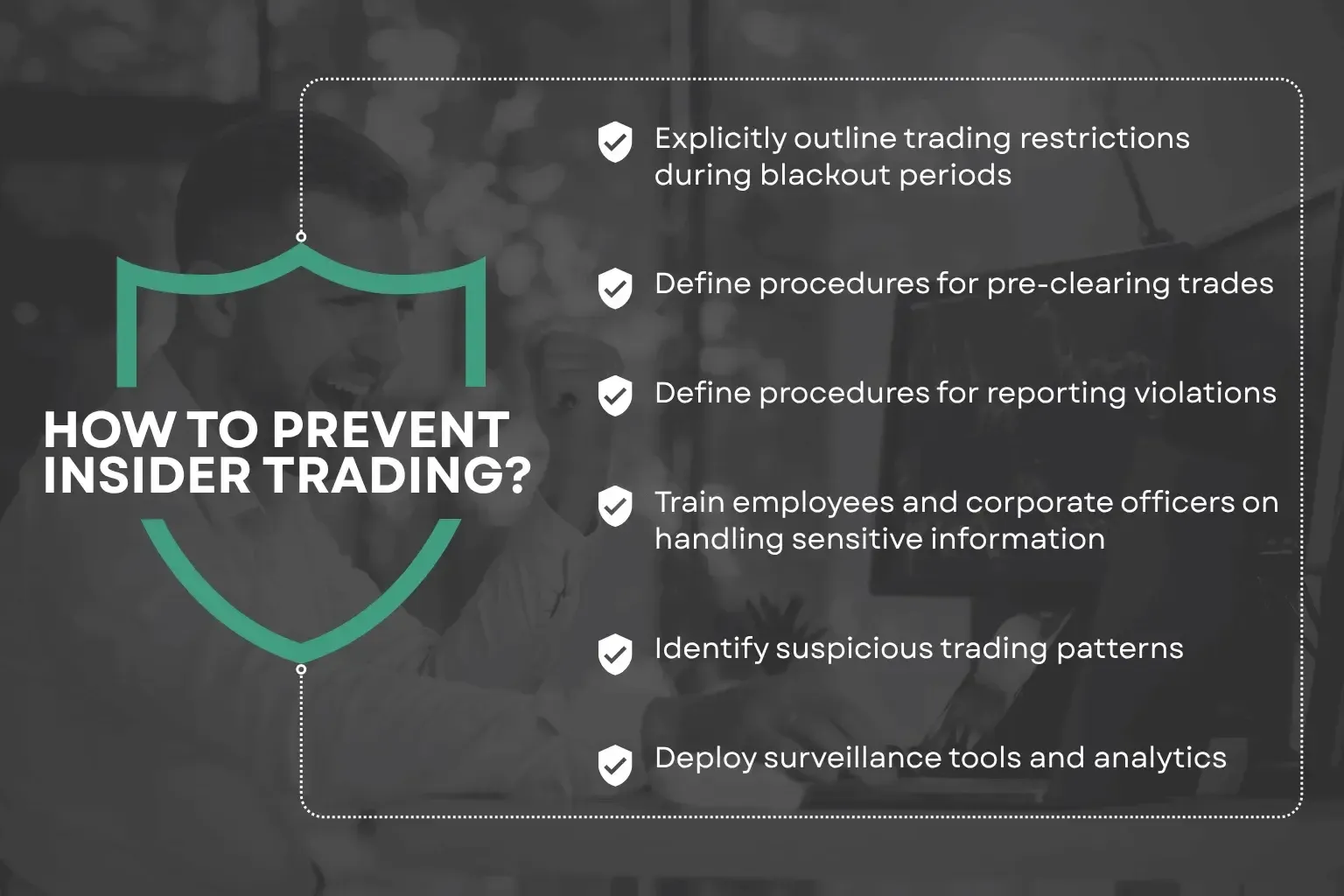
Implement Insider Trading Policies:Establish and rigorously enforce comprehensive insider trading policies defining Material Non-Public Information (MNPI) with relevant examples. Explicitly outline trading restrictions during blackout periods and detail procedures for pre-clearing trades and reporting violations.
Regular training and communication are crucial to ensuring understanding of prohibitions and consequences. Policies should address MNPI confidentiality and avoid tipping. Strong policies prevent illegal activity, foster ethical behavior, and maintain investor confidence.
Regular Training: All employees must receive ongoing training on insider trading laws, company policies, the definition of insider information, examples of illegal activities, consequences, and ethical obligations. Training should also cover procedures for handling sensitive information and reporting violations. Regular refresher courses and updates are necessary for continued awareness and compliance.
Monitoring and Pre-Clearance Procedures: Implement strong monitoring and mandatory pre-clearance for securities trades by executives, directors, and employees with access to material non-public information.
Pre-clearance should involve risk assessment considering the individual's role, information access, and trade timing relative to company events. Ongoing monitoring of trading activity can detect suspicious patterns. These controls reduce insider trading risks and promote ethical conduct.
Encourage Ethical Behavior:A strong culture of compliance and ethics is crucial for preventing insider trading. This requires embedding ethical considerations into daily operations, with leadership championing ethical behavior.
Regular training, open reporting channels, and consistently enforced disciplinary procedures are essential. Proactive measures like monitoring trading activity and blackout periods can further mitigate risk. A robust ethical environment significantly reduces the likelihood of insider trading.
Detection and Enforcement:Detecting insider trading is challenging due to the complexity of financial transactions and the covert nature of information leaks. The SEC and other regulators use sophisticated surveillance tools, data analytics, and whistleblower tips to identify suspicious trading patterns. Prosecutions often rely on wiretaps, emails, and cooperation agreements, as seen in the Galleon Group case.
Combating Illegal Insider Trading to Protect Value and Values in Financial Markets
Insider trading remains a persistent threat to the integrity of financial markets. The real-world cases highlighted here demonstrate the severe consequences for individuals and organizations, the critical role of regulatory oversight, and the importance of ethical conduct. Compliance, transparency, and robust internal controls are essential to prevent insider trading and maintain trust in the financial system.
Additional Resources
Insider Trading by William Wang & Marc Steinberg (LexisNexis)
A comprehensive legal treatise updated for current U.S. insider trading laws, enforcement, and compliance strategies, the book provides a detailed perspective on insider trading and the legislative framework in the U.S to protect investor value.
The Billionaire's Apprentice: The Rise of The Indian-American Elite and The Fall of The Galleon Hedge Fund by Anita Raghavan
This book provides a meticulous account of the Galleon Group hedge fund scandal led by Raj Rajaratnam, one of the most significant insider trading cases prosecuted by the SEC.
Den of Thieves by James B. Stewart
The book provides an account of the insider trading scandals of the 1980s involving figures like Ivan Boesky and Michael Milken. It decodes how these financiers exploited sensitive information on securities trading and the subsequent legal crackdown.
Contact information for legal advice or defense
At Levi & Korsinsky, LLP, we specialize in investor class action lawsuits, representing shareholders who have suffered financial losses due to securities fraud, corporate misconduct, and deceptive investment practices.
With over 80 collective years of experience, our experienced attorneys are on hand to provide you with the support and legal expertise you need to maximize your recovery.
Disclaimer: The information provided in this blog is for general informational purposes only and does not constitute legal advice. Readers should not act or refrain from acting on any of the information contained in this blog without consulting a qualified legal professional. Levi & Korsinsky LLP is not responsible for any actions taken or not taken based on the information provided in this blog.