
Defining Financial Statements and Their Purpose
What Are Financial Statements?
At their core, financial statements are formal records summarizing a company’s financial performance and position over a specific period.
They translate complex financial data into standardized reports, enabling company managers, investors, analysts, and regulators to assess a firm’s financial health, performance, and risk profile.
The Role of Financial Statements in Business
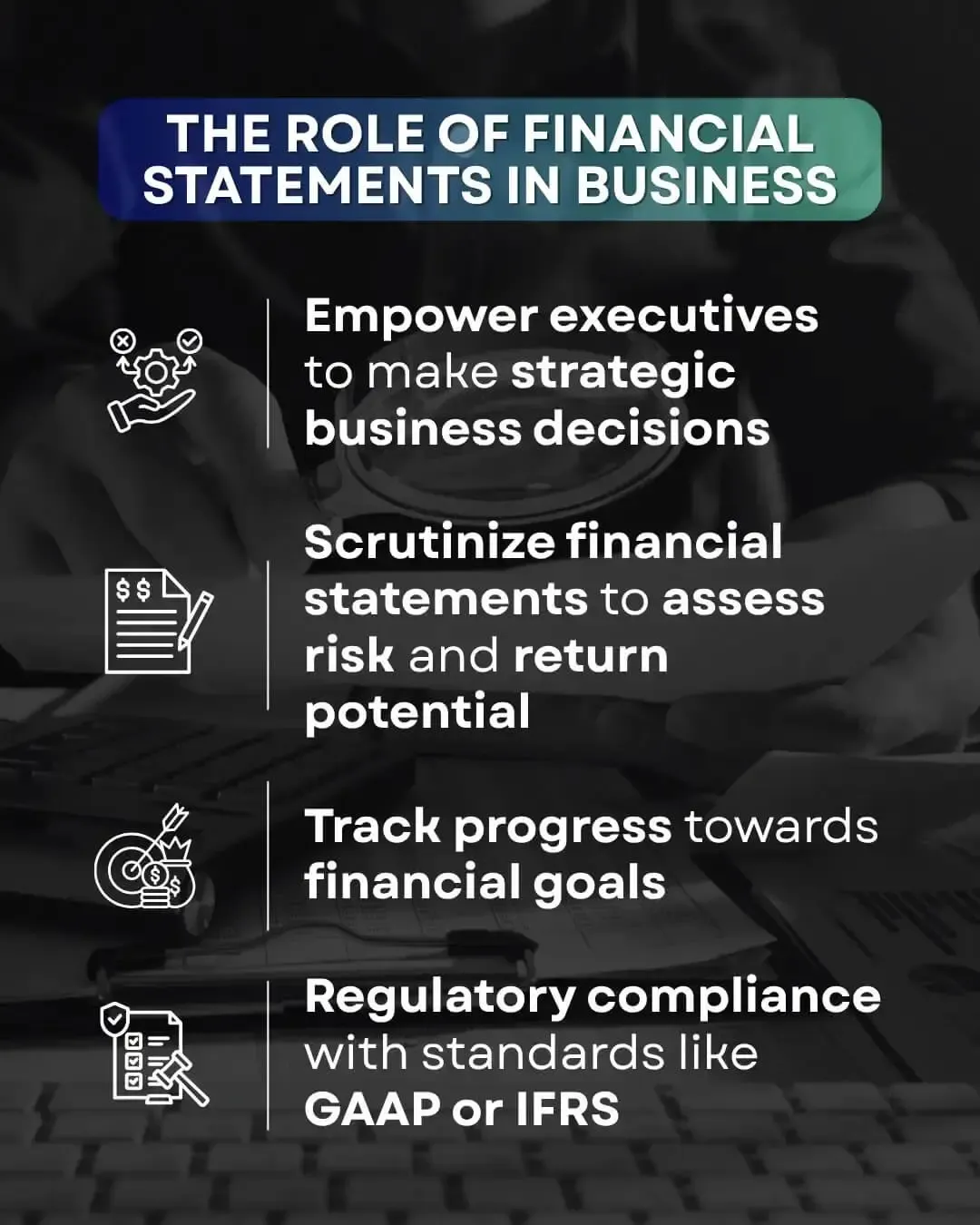
Financial statements serve multiple pivotal functions:
- Decision-Making: They empower executives to make strategic business decisions, benchmark against industry peers, and track progress towards financial goals.
- Accountability and Transparency: Stakeholders and regulators use these records to hold businesses accountable for their operations and financial stewardship.
- Attracting Investment and Loans: Investors and lenders scrutinize financial statements to assess risk and return potential before committing their capital.
Regulatory Compliance: In many jurisdictions, regulators require financial statements prepared under standards such as GAAP or IFRS.
Key Components of Financial Statements
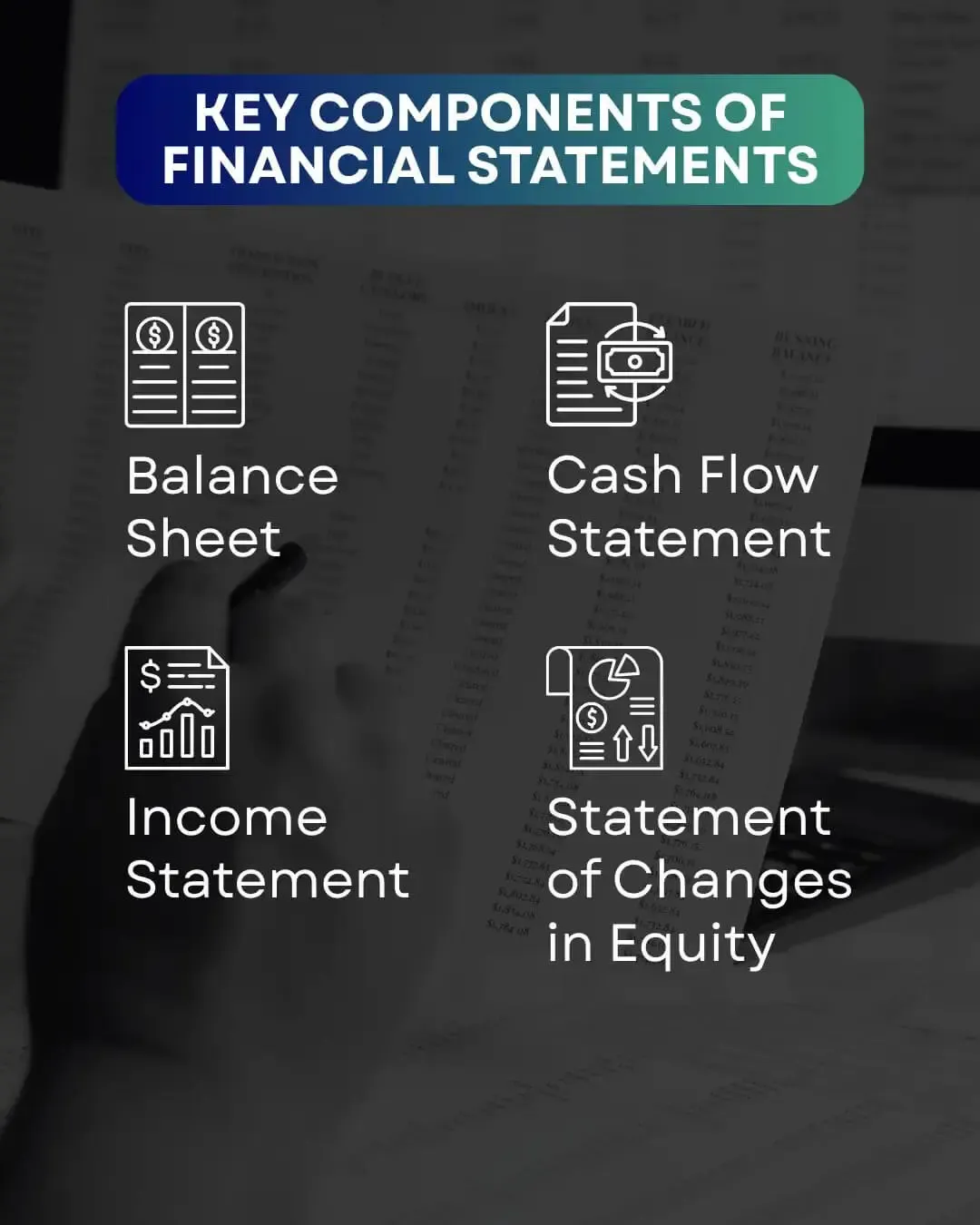
Broadly, four primary types of financial statements are issued by most companies:
- Balance Sheet
- Income Statement
- Cash Flow Statement
- Statement of Changes in Equity
Below, we’ll examine what each reveal and how to read them.
Balance Sheet: Analyzing Your Assets and Liabilities
The balance sheet, also known as the statement of financial position, provides a snapshot of a company’s assets, liabilities, and shareholders’ equity at a specific point in time. It answers, “What does the company own, and what does it owe?”
Main Parts of a Balance Sheet
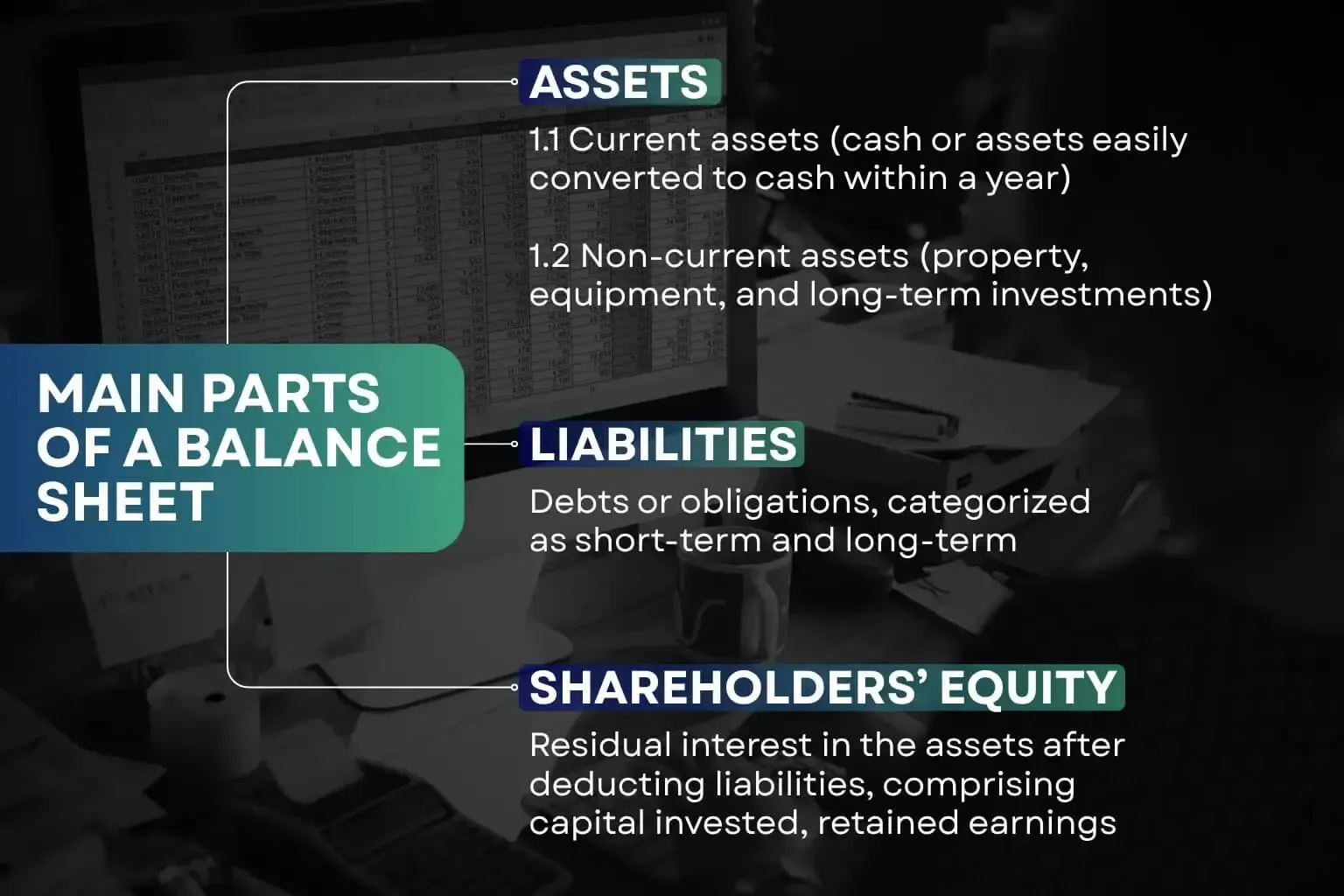
- Assets:Everything of value the company owns, divided into:
- Current assets (cash or assets easily converted to cash within a year)
- Non-current assets (property, equipment, and long-term investments)
- Liabilities: Debts or obligations, categorized as short-term (due within one year) and long-term.
- Shareholders’ Equity: The residual interest in the assets after deducting liabilities, comprising capital invested, retained earnings, and sometimes preferred stock.
Income Statement: Understanding Profitability
Also known as the profit and loss (P&L) statement, the income statement details revenues, expenses, gains, and losses, revealing profitability over a given period (e.g., quarterly or annually).
Key Elements
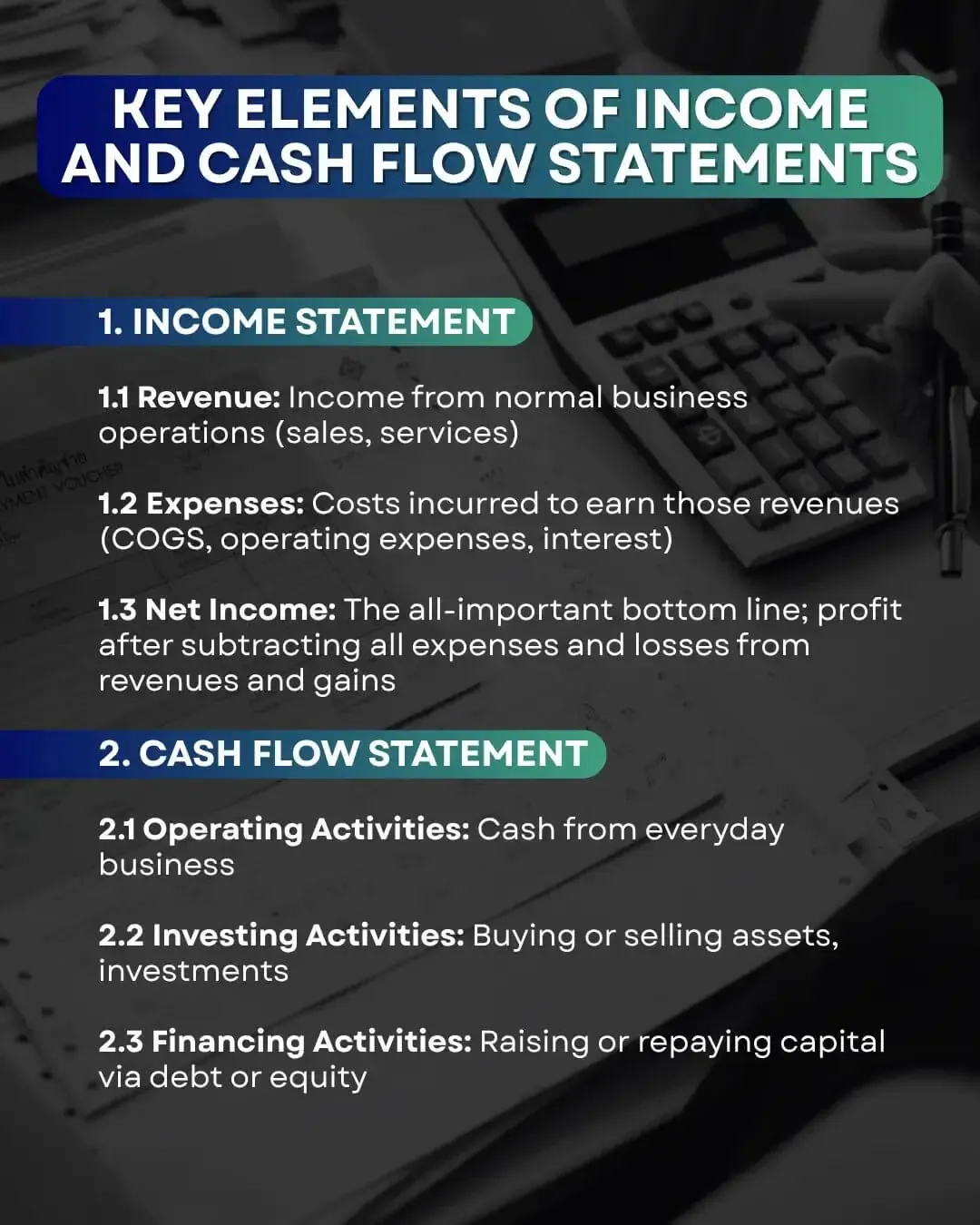
Revenue: Income from normal business operations (sales, services).
- Expenses: Costs incurred to earn those revenues (COGS, operating expenses, interest).
- Net Income: The all-important bottom line; profit after subtracting all expenses and losses from revenues and gains.
Formula:
Net Income = (Total Revenue + Gains) − (Total Expenses + Losses)
This statement can be presented in a single-step format (simple summing) or a multi-step format (separating operating and non-operating results). Major public companies adhere to a multi-step format for regulatory transparency.
Cash Flow Statement: Monitoring Cash Management
The cash flow statement tracks the actual movement of cash inflows and outflows within a business throughout time. It helps gauge liquidity and reveals whether the firm can fund operations and expansion without outside help.
Cash Flow Sections
Operating Activities: Cash from everyday business.
- Investing Activities: Buying or selling assets, investments.
- Financing Activities: Raising or repaying capital via debt or equity.
Under U.S. GAAP, the statement of cash flows is a required part of the full set of financial statements filed with the SEC.
Statement of Changes in Equity: Tracking Shareholder Value
This statement, sometimes referred to as the statement of retained earnings or owner’s equity, tracks how equity changes through profits, dividends, share issuances, and other factors during a reporting period.
What does it include?
- Opening balance of equity.
- Net income or loss for the period.
- Dividends paid (reducing equity).
- New shares issued (increasing equity).
- Other comprehensive income or adjustments.
This statement shows how management decisions—such as issuing shares, paying dividends, or retaining earnings—affect shareholders’ equity over time.
How Should Investors Read and Interpret a Balance Sheet, Cash Flow Statement, and an Income Statement?
Step-by-Step Guide to Reading a Balance Sheet
- Start with Current Assets and Liabilities: Assess liquidity and short-term financial health.
- Examine Long-Term Items: Review property, equipment, and long-term debts.
- Review Shareholders’ Equity: Consider the value remaining for owners.
- Balance Equation: Confirm Assets = Liabilities + Equity.
What steps should securities market investors follow while reading a balance sheet?
Assets: Examine current assets (such as cash, marketable securities, accounts receivable, and inventory). These show the liquidity position of the company and the company's ability to cover short-term obligations.
Liabilities: Scrutinize both current liabilities (short-term debts, accounts payable) and long-term liabilities (long-term debt, bonds payable). Companies with lower liabilities relative to assets are usually in a safer financial position.
Shareholders’ Equity: Strong and growing equity is generally a positive sign, reflecting retained earnings and capital invested by owners.
Interpreting an Income Statement
Step-by-Step Guide to Reading an Income Statement
- Focus on revenue growth, cost controls (including COGS and operating expenses), and gross and net profit margins.
- Track trends across periods to detect improvement or decline.
- Pay special attention to one-time gains or losses that could mask true profitability.
What steps should securities market investors follow while reading an income statement?
Revenue (Sales/Turnover): Strong and growing revenue suggests increasing market demand and effective sales strategy, which are favorable for long-term investors.
Cost of Goods Sold (COGS): This metric represents the direct costs of producing goods or services and allows investors to assess gross profitability and cost control.
Gross Profit and Gross Margin: Dividing gross profit by revenue gives gross margin—a critical profitability metric that signals how efficiently a company turns sales into profit after production costs
Operating Expenses: Investors need to check for operational efficiency. A good insight for investors is to map expenses to revenue growth.
Net Income (Profit or Loss): Net income or the bottom line, trends directly reflect the company’s success in generating shareholder value
Earnings Per Share (EPS): EPS measures net income attributable to common shareholders per share outstanding. Investors often use it, along with valuation multiples like P/E ratios, to compare profitability across companies.
Analyzing Cash Flow Statements
Step-by-Step Guide to Reading a Cash Flow Statement
- Positive operating cash flow signals a healthy core business.
- Compare investing and financing activities—excessive asset sales or debt-funded operations may be a red flag.
- Detailed projections help anticipate potential liquidity challenges and plan for expansion or emergencies.
As a securities market investor, what steps should I follow while reading a cash flow statement?
Cash Flow from Operating Activities: Positive and growing operating cash flow usually reflects strong business fundamentals.
Analyze Investing Activities: High, sustained capital investment signals growth initiatives. However, the key question for investors to ask here is if such investing activities yield operating cash flows.
Evaluate Financing Activities: Excessive debt-raising with weak operating cash may signal risk, while steady dividend payments suggest financial stability.
Free Cash Flow (FCF): Free cash flow is measured as the difference between operating cash flow and capital expenditures. A positive FCF indicates the company has cash left to expand, pay down debt, or return value to shareholders after maintaining its assets.
Red Flags: A declining or consistently negative operating cash flow should be treated as a warning. Similarly, a heavy reliance on financing or frequent asset sales to support operations is yet another warning for investors.
Consolidated Financial Statements
When a corporation owns multiple subsidiaries, consolidated financial statements aggregate the assets, liabilities, income, and cash flows of the parent and its subsidiaries.
This approach paints a holistic picture for investors and regulators, enabling clarity about the group’s overall economic condition rather than that of individual companies.
What Do Investors Need to Know About Consolidated Financial Statements?
Consolidated financial statements offer securities market investors the following insights:
- Holistic View: They provide investors with a consolidated view of the financial health, cash flow, and profitability of the parent company and all its controlled subsidiaries.
- Scale: The parent and subsidiaries operate as a single economic entity. Therefore, consolidated statements reflect the true scale, resources, liabilities, and profitability.
- Risk-Returns Trade- Off: Investors can better assess risks and returns considering all controlled entities. For example, subsidiaries might have debt or liabilities not visible if looking only at the parent company's separate statements.
- Avoiding Double Counting: Intercompany transactions and balances are eliminated, so investors see net results without internal duplication.
The Importance of Financial Statements for Stakeholders
For Investors: Making Informed Decisions
Investors scrutinize financial statements to identify:
- Growth trajectories,
- Profit opportunities,
- Red flags signaling risk or instability.
For Management: Strategic Planning and Performance Analysis
Executives and managers utilize these reports to establish goals, measure success, refine strategies, and motivate their teams. Financial statements serve as both a roadmap and a report card.
For Regulators: Ensuring Compliance and Transparency
Agencies such as the U.S. Securities and Exchange Commission (SEC) require regular and rigorous disclosure of financial statements to promote market transparency and protect investors. Failure to disclose accurately can result in severe penalties and reputational damage.
Resources and Tools for Navigating Financial Statements
Books, Courses, and Online Resources for Further Learning
- “ Financial Statement Analysis” by Martin Fridson and Fernando Alvarez (a widely recommended primer).
- U.S. SEC’s “ Beginners’ Guide to Financial Statements”.
- Investopedia, Financial Times, and The Wall Street Journal for regular analysis and news on financial statements.
Financial Software: Making Data Management Easier
From simple spreadsheets to robust enterprise platforms (like QuickBooks, Oracle NetSuite, or SAP), financial management software automates much of the heavy lifting, offering dashboards, forecasting, and analytics in real time.
Mastering the language of financial statements empowers you to see beneath surface-level performance and make more informed decisions—whether you’re growing a business, deploying capital, or safeguarding the integrity of markets.
As regulators, legendary investors, and business leaders agree, fluency in financial statements is indispensable in understanding business realities and shaping future success.
Disclaimer: The information provided in this blog is for general informational purposes only and does not constitute legal, financial or investment advice. Readers should not act or refrain from acting based on the information contained in this blog without consulting a qualified legal professional. Levi & Korsinsky LLP is not responsible for any actions taken or not taken based on the information provided in this blog.