
Defining Securities: What Are They?
According to the Securities Act of 1933, a security is a tradable financial instrument that holds monetary value and represents an ownership position, a creditor relationship, or ownership rights, as defined by an option.
Securities are issued by corporations, governments, and other entities to raise capital for various purposes, including business expansion, infrastructure development, or public spending.
The most common examples of securities include stocks, bonds, and derivatives.
The Essence of Securities in Finance
Securities are the backbone of modern finance. They enable companies and governments to access capital from a broad pool of investors and, in turn, allow individuals and institutions to participate in economic growth and wealth creation.
By facilitating the transfer of funds from savers to those who need capital, securities markets play a vital role in allocating resources and risk within the economy.
Key Characteristics of Securities
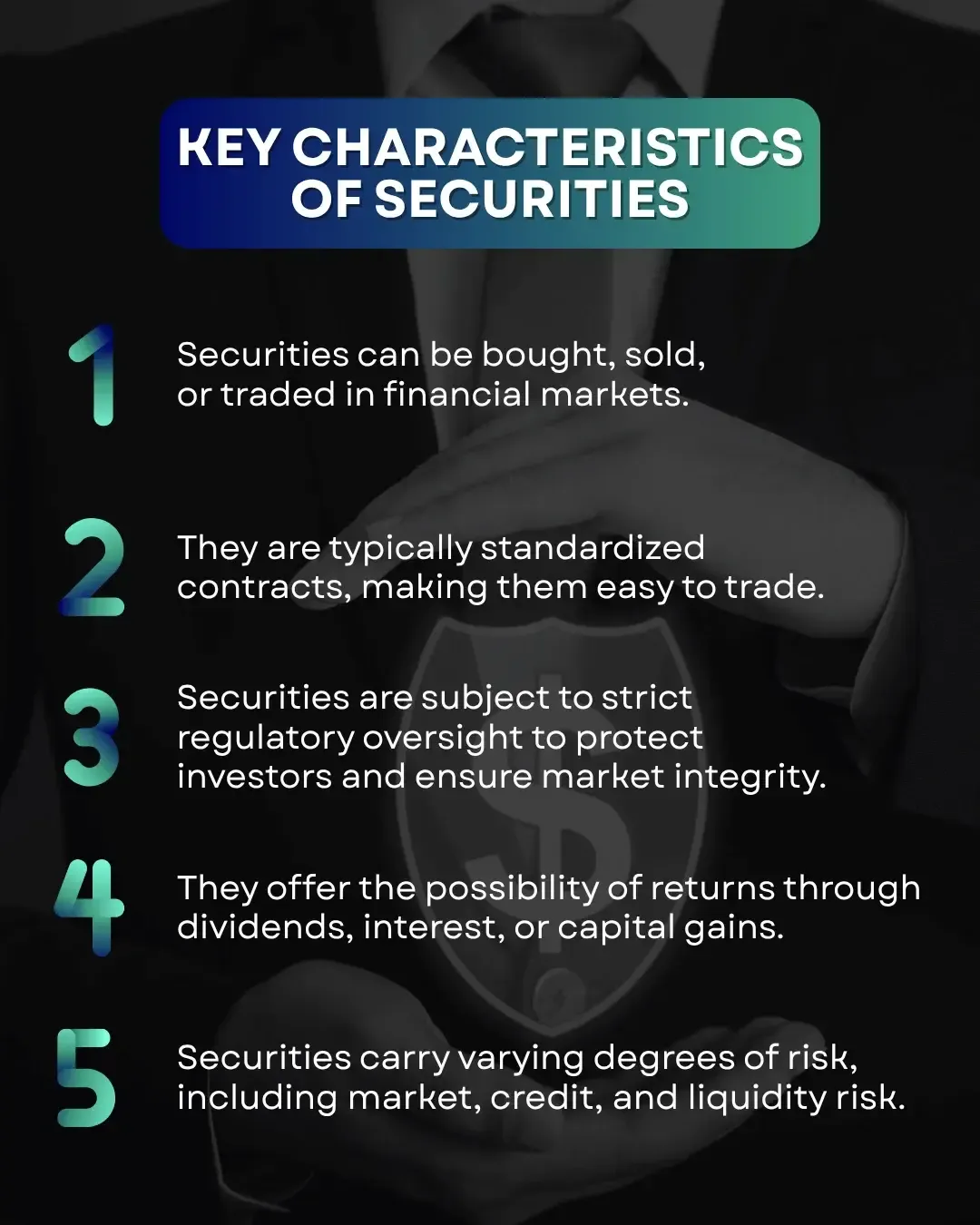
- Transferability: Securities can be bought, sold, or traded in financial markets. (Securities Exchange Act of 1934, Section 3(a)(10))
- Standardization: They are typically standardized contracts , making them easy to trade.
- Regulation: Securities are subject to strict regulatory oversight to protect investors and ensure market integrity.
- Return Potential: They offer the possibility of returns through dividends, interest, or capital gains.
- Risk Exposure: Securities carry varying degrees of risk, including market, credit, and liquidity risk. ( Regulations S-K)
Mechanics of Securities: How They Function
Securities function as investment vehicles. When an investor purchases a security, they are either lending money ( as with government and corporate bonds), acquiring ownership ( as with stocks), or entering into a contract based on the value of another asset (as with derivatives).
Issuers of securities use the proceeds to meet their funding needs, while investors seek returns in exchange for the risks they assume.
Investment Instruments and Their Roles
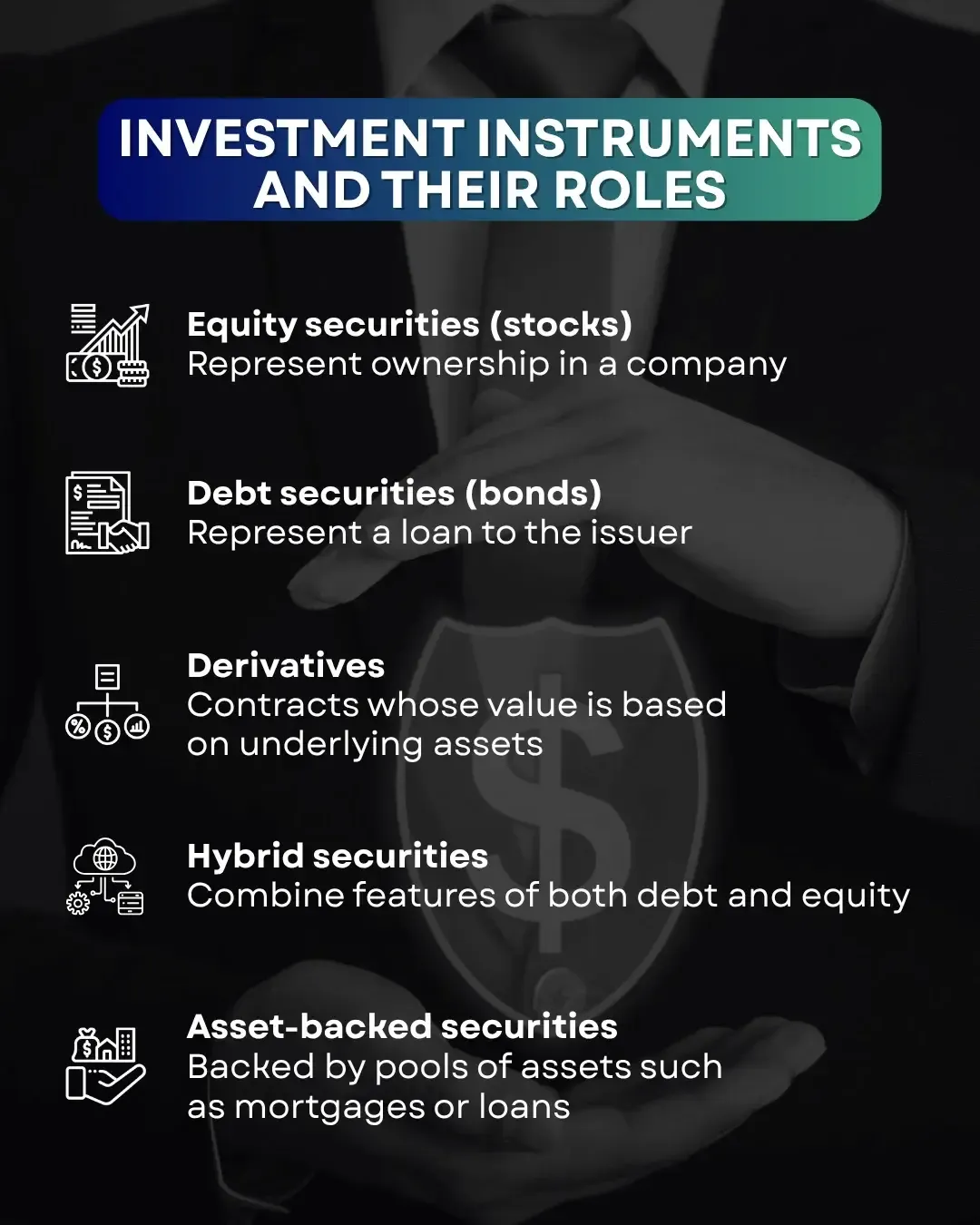
Investment instruments are the tools investors use to achieve financial goals. These include:
- Equity securities (stocks): Represent ownership in a company.
- Debt securities (government and corporate bonds): Represent a loan to the issuer.
- Derivatives: Contracts whose value is based on underlying assets.
- Hybrid securities: Combine features of both debt and equity.
- Asset-backed securities: Backed by pools of assets such as mortgages or loans.
Understanding the Howey Test and Its Implications
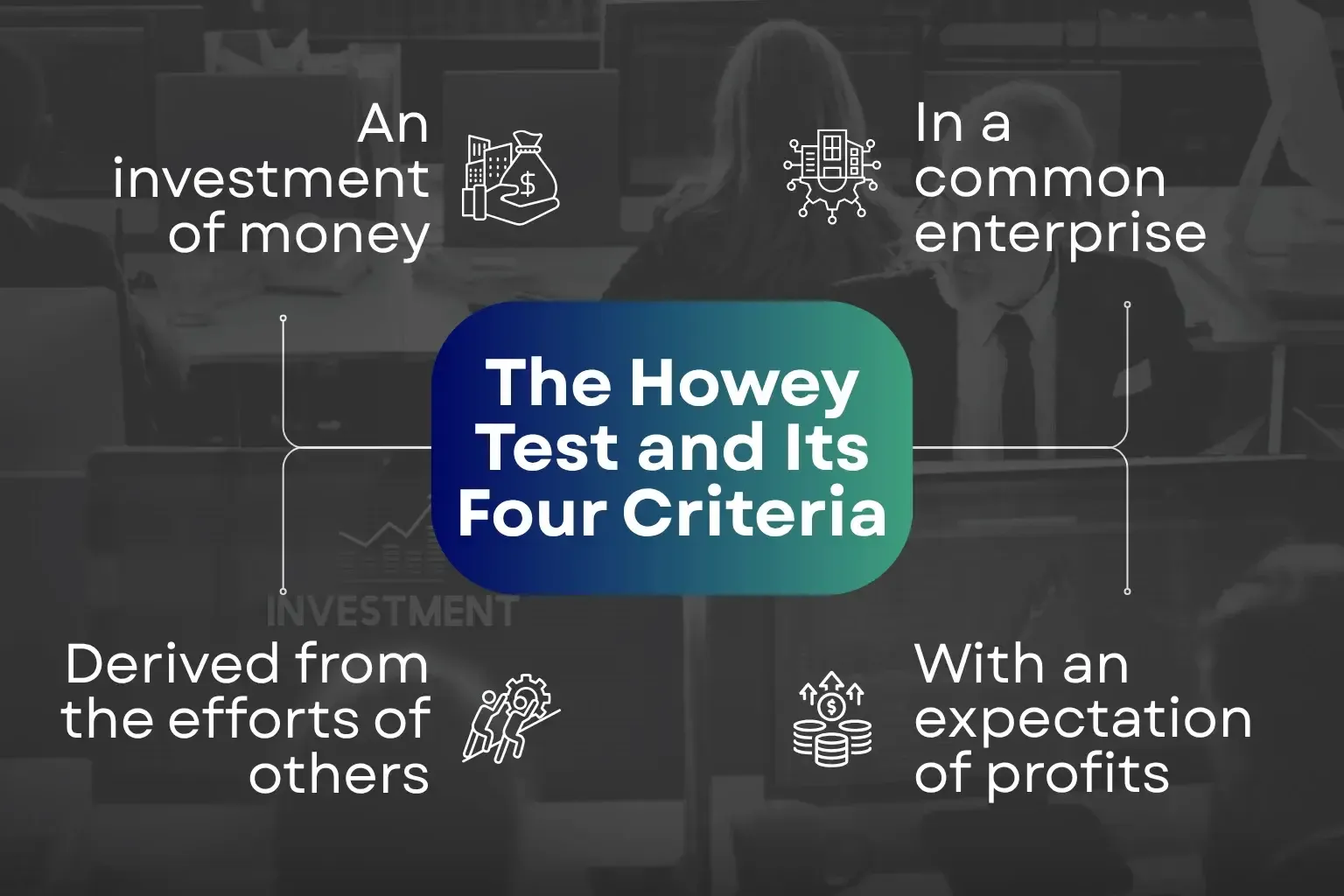
The Howey Test is a legal standard established by the U.S. Supreme Court in the 1946 case SEC v. W.J. Howey Co. to determine whether a transaction qualifies as an "investment contract" and thus a security under U.S. law. The test has four criteria:
- An investment of money
- In a common enterprise
- With an expectation of profits
- Derived from the efforts of others
If a transaction meets all four prongs, it is considered a security and subject to securities regulation under the auspices of the Securities and Exchange Commission (SEC ).
The Howey Test is significant because it applies broadly, encompassing not only traditional stocks and bonds but also unconventional assets, such as cryptocurrencies and specific real estate arrangements.
Diverse Types of Securities in the Stock Market
a) Equity Securities: Common vs. Preferred Stock
- Common Stock: Represents ownership in a corporation, with voting rights and the potential for dividends and capital appreciation. Common shareholders are last in line to claim company assets in the event of liquidation.
- Preferred Stock: Also represents ownership, but typically does not carry voting rights. Preferred shareholders have a higher claim on assets and earnings than common shareholders, normally receiving fixed dividend payments.
b) Debt Securities: Bonds and Their Variations
- Corporate Bonds: Issued by companies to raise capital, offering fixed interest payments and repayment of principal at maturity.
- Government Bonds: Issued by governments; considered low-risk .
- Municipal Bonds: Issued by states, cities, or other local entities.
- Convertible Bonds: These bonds can be converted into a predetermined number of the issuer’s equity shares.
c) Hybrid Securities: Bridging the Gap
Hybrid securities combine characteristics of both debt and equity. Examples include:
- Convertible bonds: Debt instruments that can be converted into equity.
- Preferred shares: Sometimes considered hybrids due to their fixed dividends (like bonds) and potential for appreciation (like stocks).
d) Derivative Securities: Understanding Financial Contracts
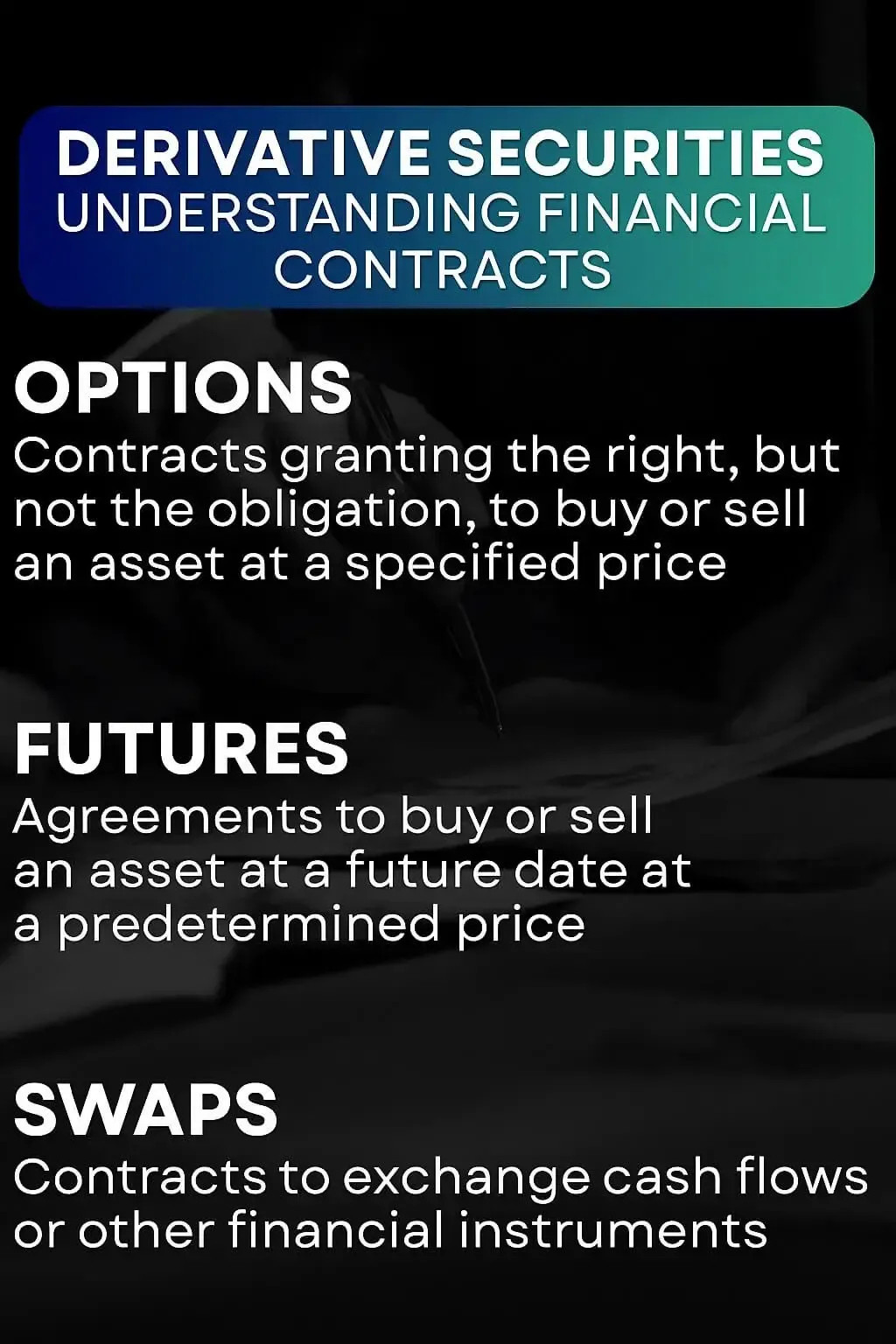
Derivatives are contracts whose value is derived from underlying assets such as stocks, bonds, commodities, or currencies. Common derivatives include:
- Options: Contracts granting the right, but not the obligation, to buy or sell an asset at a specified price.
- Futures: Agreements to buy or sell an asset at a future date at a predetermined price.
- Swaps: Contracts to exchange cash flows or other financial instruments.
e) Asset-backed Securities: Risks and Rewards
Asset-backed securities (ABS) are financial instruments backed by pools of assets, including loans, leases, credit card debt, and receivables.
The most well-known ABS are mortgage-backed securities (MBS). While ABS can offer attractive yields, they also carry risks, especially if the underlying assets perform poorly.
The Trading Landscape: How Securities Are Bought and Sold
Primary vs. Secondary Markets Explained
- Primary Market: Where new securities are issued and sold for the first time, typically through initial public offerings (IPOs) or bond issuances. The issuer receives the proceeds.
- Secondary Market: Where previously issued securities are traded among investors. The issuer is not involved, and the balance of supply and demand determines prices.
The Role of Exchanges in Securities Trading
Stock exchanges, such as the New York Stock Exchange (NYSE) and NASDAQ, provide organized platforms for the trading of securities.
They facilitate price discovery, liquidity, and transparency. Exchanges are regulated to ensure fair trading practices and investor protection.
Market Orders vs. Limit Orders: What's the Difference?
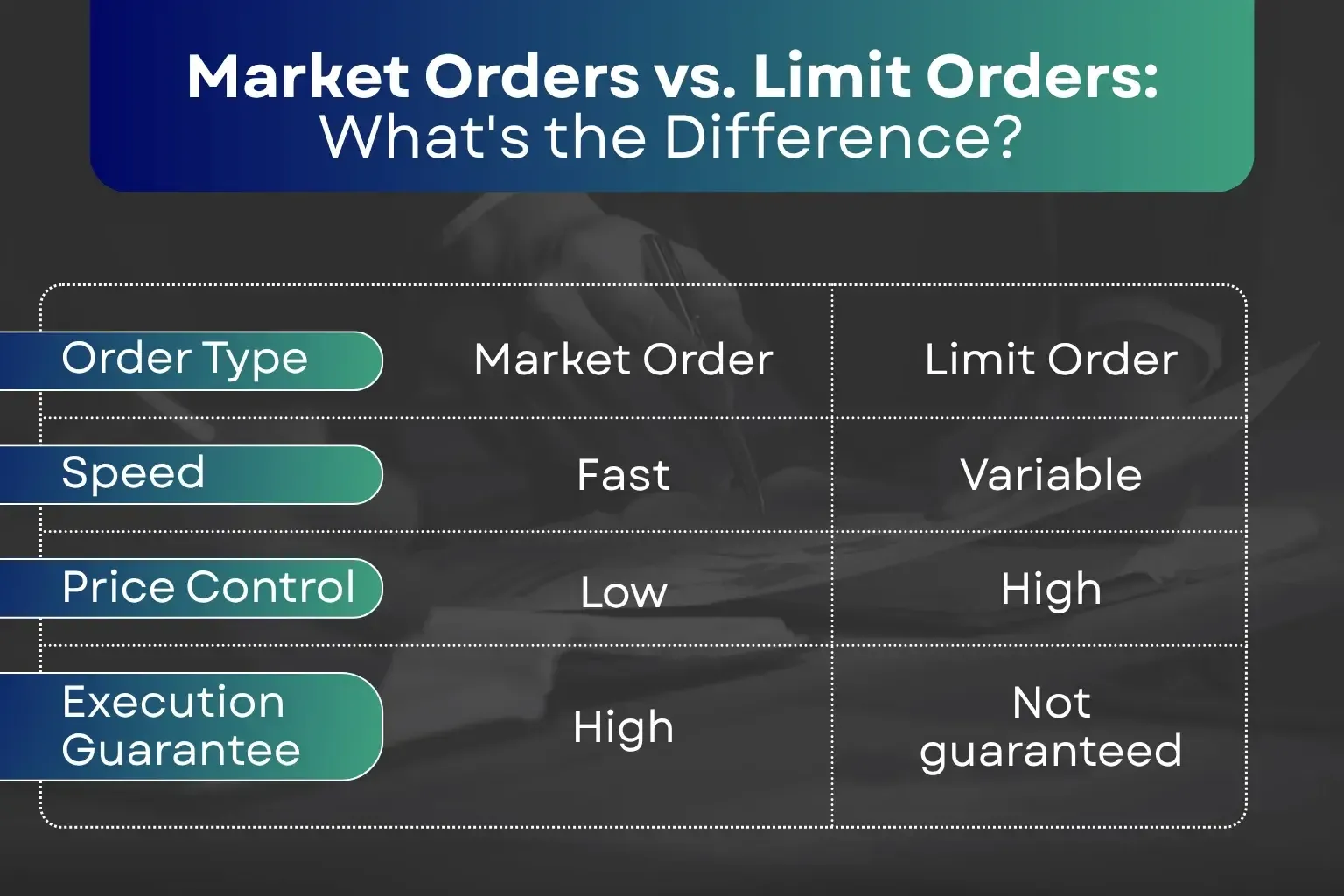
- Market Order: An instruction to buy or sell a security immediately at the best available price. Execution is fast, but the price is not guaranteed.
- Limit Order: An instruction to buy or sell a security at a specific price or better. Execution is not guaranteed, but price control is higher.
| Order Type | Speed | Price Control | Execution Guarantee |
| Market Order | Fast | Low | High |
| Limit Order | Variable | High | Not guaranteed |
Investing in Securities: Strategies and Considerations
Benefits of Adding Securities to Your Portfolio
- Wealth Creation: Historically, equities have provided substantial long-term returns.
- Diversification: Securities allow investors to spread risk across different asset classes.
- Liquidity: Many securities are easily traded, allowing quick access to funds.
- Income Generation : Bonds and some stocks offer regular interest or dividend payments.
Risks Associated with Securities Investment
- Market Risk: Prices can fluctuate due to economic, political, or company-specific events.
- Credit Risk: The issuer may default on payments (more relevant for bonds).
- Liquidity Risk: Some securities may be complex to sell quickly at a fair price.
- Interest Rate Risk: Changes in interest rates can affect bond prices.
How to Evaluate a Security Before Investing
- Financial Health of Issuer: Review financial statements, credit ratings, and business prospects.
- Market Conditions: Assess broader economic trends and sector performance to inform investment decisions.
- Risk-Return Profile: Consider your own risk tolerance and investment goals.
- Regulatory Filings: Review disclosures required by the SEC and other regulatory agencies.
Regulatory Framework: Safeguarding Investors
Overview of Securities Regulation in Major Markets
Securities markets are heavily regulated to protect investors, maintain fair and efficient markets, and facilitate the formation of capital.
In the U.S., the Securities Act of 1933 and the Securities Exchange Act of 1934 are foundational laws governing securities issuance and trading.
The Role of the SEC and Other Regulatory Bodies
The Securities and Exchange Commission (SEC ) is the primary federal regulator of securities markets in the U.S. Its responsibilities include:
- Overseeing securities exchanges and broker-dealers
- Enforcing securities laws to prevent fraud and insider trading
- Requiring public companies to disclose financial and operational information
- Reviewing and approving securities offerings before they reach the public
Other bodies, such as self-regulatory organizations, also play key roles in market oversight.
Unique Security Types: Expanding Your Knowledge
Marketable Securities: Liquidity and Accessibility
Marketable securities are highly liquid financial instruments that can be easily converted to cash. Examples include publicly traded stocks, bonds, and Treasury bills.
Their liquidity makes them attractive for both individuals and institutions seeking flexibility.
Treasury Securities: Government-backed Investments
Treasury securities are debt instruments issued by governments to finance public spending. In the U.S., these include:
- Treasury Bills (T-Bills): Short-term, zero-coupon securities sold at a discount and redeemed at face value.
- Treasury Notes and Bonds: Longer-term instruments that pay periodic interest.
- State and Municipal Bonds: Issued by state and local governments for local projects.
Treasury securities are considered among the safest investments, as the full faith and credit of the government backs them.
Global Variations: Securities in Different Countries
While the core concepts of securities are universal, the types, regulations, and market practices can vary significantly across countries.
For example, the term "stock" in the U.S. is often referred to as "shares" in the U.K., and some countries have unique types of securities or regulatory frameworks.
Comparative Insights: Distinguishing Securities from Stocks
Common Misconceptions About Stocks vs. Securities
- All stocks are securities, but not all securities are stocks . Stocks are a subset of securities representing ownership in a corporation. Other securities include bonds, options, and additional types of investments.
- Securities can be debt, equity, or hybrid instruments. Stocks are purely equity instruments.
Investment Tools: The Role of Mutual Funds and ETFs
Mutual funds and exchange-traded funds (ETFs) are investment vehicles that pool money from multiple investors to buy a diversified portfolio of securities. These funds offer:
- Diversification: Reduced risk through exposure to many securities.
- Professional Management: Fund managers make investment decisions.
- Liquidity: Mutual funds can be bought or sold at their net asset value; ETFs, on the other hand, trade on exchanges like stocks.
Understanding How Funds Pool Securities
Funds collect capital from investors and use it to purchase a wide range of securities according to the fund’s objective. This pooling allows investors to access diversified portfolios with relatively small investments.
Benefits of Investing in Funds Over Individual Securities
- Lower Risk: Diversification reduces the impact of any single security’s poor performance.
- Convenience: Investors can access a broad market or sector through a single investment.
- Cost Efficiency: Lower transaction costs compared to buying individual securities.
Make an Informed Choice for Your Next Securities Investment
A solid understanding of securities is essential for anyone looking to participate in the financial markets. Securities are the primary vehicles through which individuals and institutions invest, save for the future, and build wealth.
They offer a range of opportunities and risks, and navigating them successfully requires knowledge of their types, mechanics, and regulatory environment.
By understanding securities, investors can make informed decisions, manage risk effectively, and achieve their financial objectives.
At Levi & Korsinsky, LLP, we specialise in legal counsel for investor class action lawsuits, representing shareholders who have suffered financial losses due to securities fraud, corporate misconduct, and deceptive investment practices.
With over 80 collective years of experience, our experienced attorneys are on hand to provide you with the support and legal expertise you need to maximise your recovery.
Disclaimer: The information provided in this blog is for general informational purposes only and does not constitute legal advice. We advise readers not to take any action or inaction based on the information contained in this blog without consulting a qualified legal professional. Levi & Korsinsky LLP is not responsible for any actions taken or not taken based on the information provided in this blog.