
Class action lawsuits are a powerful tool for consumers and employees to seek compensation when the actions of large corporations or organizations have harmed them.
When these lawsuits are resolved, eligible individuals may receive a class action settlement check—a payment distributed to members of the affected group, or "class", as compensation for damages or losses suffered.
Understanding how these class action settlement checks work, who qualifies, and what to expect is crucial for anyone who receives or anticipates receiving such a payment.
This guide explores the class action settlement process, including eligibility, claiming your check, potential issues, tax implications, and answers to frequently asked questions.
How Class Action Settlements Work
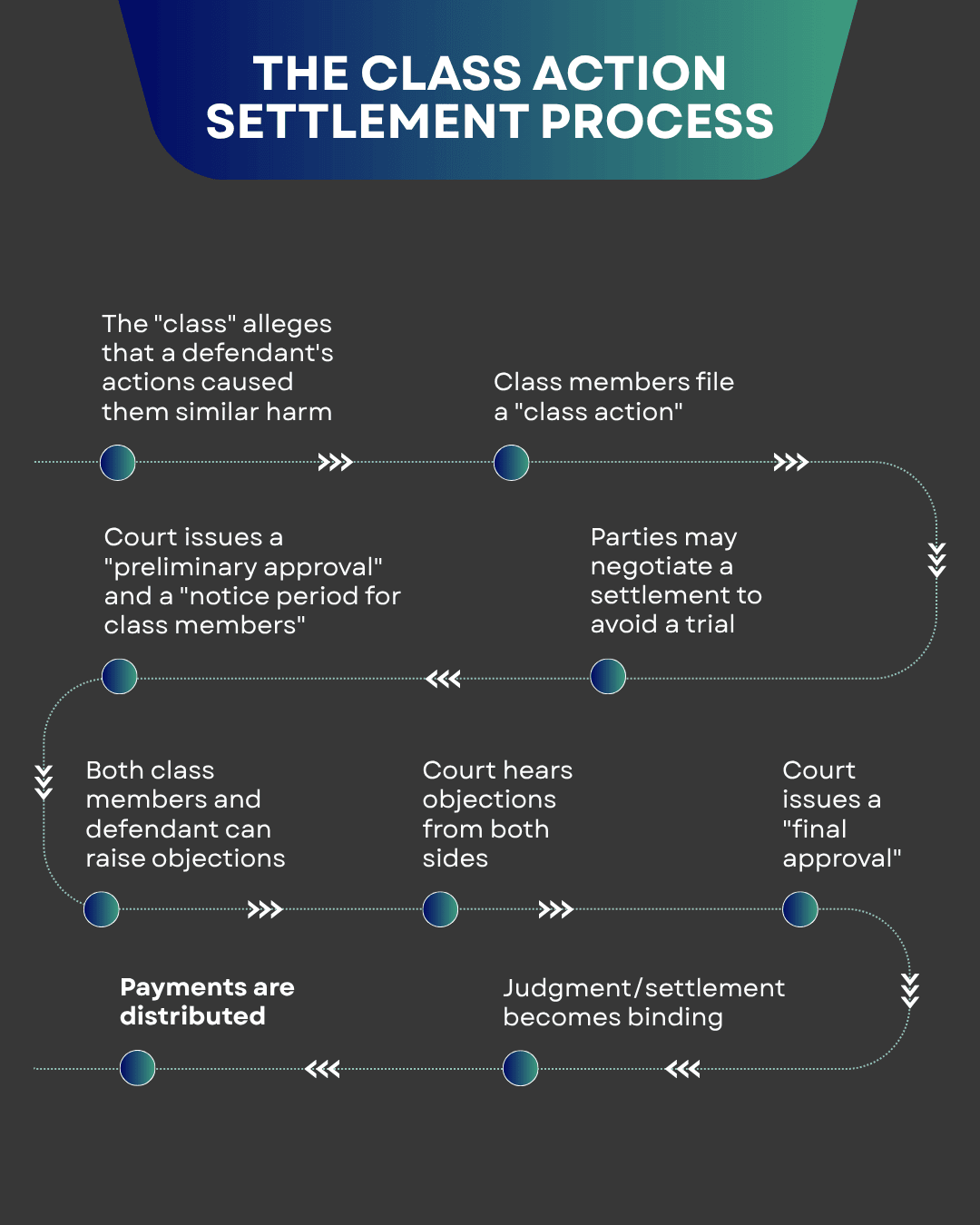
Class action lawsuits typically begin when a group of people, collectively known as the "class", allege that a defendant's actions caused them similar harm. These cases often involve consumer products, privacy violations, employment issues, or securities fraud.
Rather than each person suing individually, a class action consolidates claims, streamlining the legal process and making it more efficient for both plaintiffs and courts.
Once a class action is filed, the parties may negotiate a settlement to avoid a lengthy trial. Settlement discussions can occur at any stage, but early settlements can save time and resources for all parties involved.
The proposed settlement must then be submitted to the court for approval. The court's role is to ensure the settlement is fair, reasonable, and adequate for all class members.
This process involves a preliminary approval, a notice period for class members, and a final approval hearing during which objections can be raised. (Rule 23(b)(3))
Only after the court grants final approval does the settlement become binding, and payments can be distributed.
Eligibility for a Settlement Check
Not everyone affected by a defendant's actions will automatically receive a settlement check. Eligibility is determined by the settlement agreement and the class definition approved by the court.
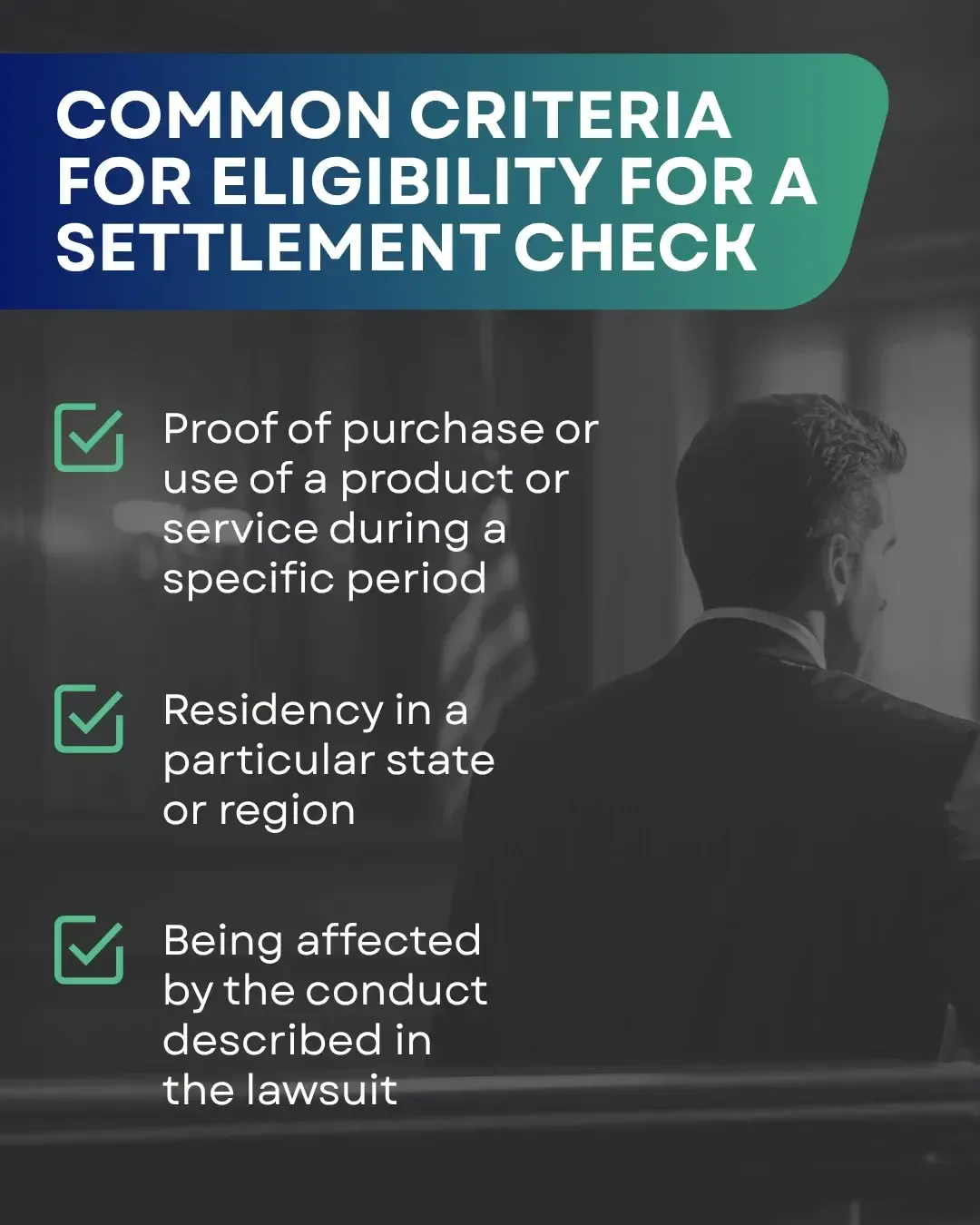
Common criteria include:
- Proof of purchase or use of a product or service during a specific period.
- Residency in a particular state or region.
- Being affected by the conduct described in the lawsuit (e.g., owning a specific device, as in the Ring or Apple Siri settlements).
The settlement notice will clearly outline who qualifies.
In some cases, the defendant is required to provide a list of potential class members, which is then used to notify eligible individuals.
If you meet the criteria, you may receive a notice by mail or email with instructions on how to claim your check.
How to Claim Your Settlement Check
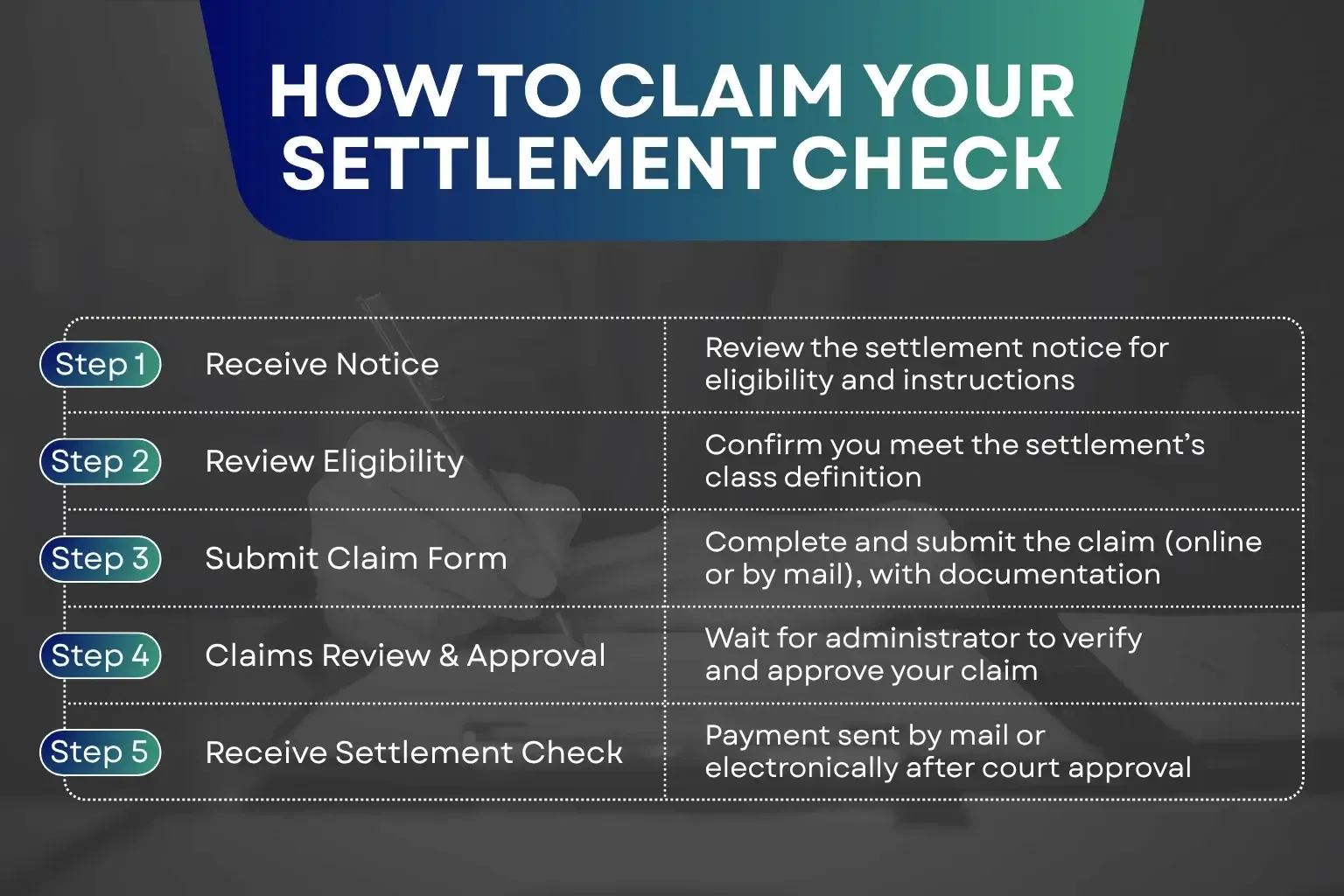
Claiming your class action settlement check usually involves the following steps:
- Receive Notice: Eligible class members are notified by mail, email, or publication. The notice includes details about the settlement, eligibility requirements, and the process for filing a claim. (Rule 23(b)(3))
- Submit a Claim Form: Most settlements require you to complete and submit a claim form, either online or by mail. The form typically asks for your contact information, proof of eligibility (such as a receipt or account number), and sometimes a declaration that you meet the class criteria (Rule 23(e)(1) and Rule 23(c)(2)).
- Meet Deadlines: Pay close attention to claim deadlines. Missing the deadline may result in your disqualification from receiving a payment.
- Provide Documentation: Some settlements require supporting documents, such as proof of purchase or account information. Be sure to include all requested documentation to avoid delays or denial of your claim.
- Await Processing: After the claim deadline passes, the settlement administrator reviews claims, resolves disputes, and issues payments.
For example, in the Ring home security camera settlement, eligible customers received an email from the Federal Trade Commission (FTC) with instructions to redeem their payment by a specific date. If they preferred a check, they could contact the refund administrator directly.
Factors Affecting the Amount of the Settlement Check
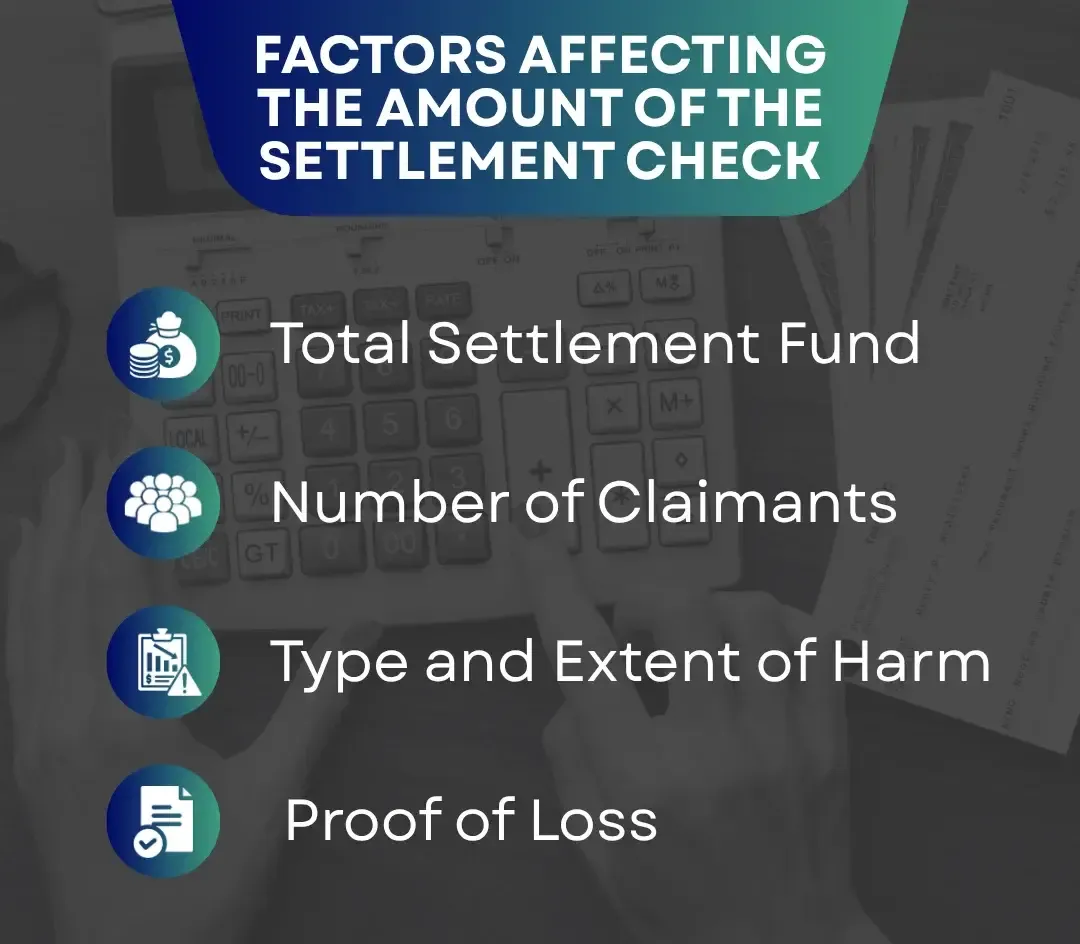
The amount of each settlement check can vary widely, depending on several factors:
- Total Settlement Fund: The overall amount agreed upon in the settlement is divided among eligible class members after deducting legal fees (Rule 23(h)) and administrative costs.
- Number of Claimants: The more people who file valid claims, the smaller each payment may be. (Rule 23(e))
- Type and Extent of Harm: Some settlements allocate more money to class members who suffered greater harm or losses, while others distribute funds equally among all class members. (Rule 23(e)(2)(D))
- Proof of Loss: Providing detailed documentation of your losses can sometimes increase your payment amount.
Typical settlement checks can range from a few dollars (in significant consumer cases) to hundreds or even thousands of dollars (in cases involving substantial financial loss or smaller classes).
For example, the Apple Siri settlement offered compensation to users whose privacy was allegedly violated, with payments depending on the number of valid claims submitted.
The Ring settlement provided refunds based on device ownership and account duration.
Common Issues and How to Resolve Them
Class action settlements can involve millions of potential claimants, so issues sometimes arise:
- Late or Missing Checks: If you do not receive your check by the expected date, first check the settlement website or contact the administrator. Payments may be delayed due to high claim volumes or processing errors.
- Incorrect Information: If your check is sent to the wrong address or contains errors, contact the settlement administrator to update your information and request a reissue.
- Rejected Claims: Claims may be denied for missing documentation, incomplete forms, or failure to meet eligibility criteria. Review the rejection notice for instructions on how to appeal or provide additional information.
- Unclaimed Funds:If you miss the claim deadline, you may forfeit your right to payment. However, some settlements offer a grace period or alternative methods to claim funds if you can demonstrate extenuating circumstances.
Tax Implications of Class Action Lawsuit Settlement Checks
Receiving a class action settlement check may have tax consequences. Generally, settlement payments are considered taxable income unless they are used to compensate for physical injuries or sickness. The tax treatment depends on the nature of the settlement:
- Compensation for Economic Losses: Payments for lost wages, business income, or punitive damages are typically taxable. (IRS Section 61)
- Compensation for Physical Injuries:Payments for physical injuries or sickness may be non-taxable, but exceptions apply. (IRS Section 104 andSection 1.104-1(c))
- Interest Payments: Any interest included in the settlement is taxable. (IRS Section 61)
It is advisable to consult a tax professional to determine your specific tax obligations and to ensure proper reporting on your tax return. The settlement administrator may provide a Form 1099 if your payment exceeds a certain threshold.
Getting Started with Your Class Section Settlement Check
Class action settlement checks can provide meaningful compensation to individuals harmed by corporate misconduct.
Understanding the process—from eligibility and claims to tax implications—empowers you to make informed decisions and maximize your recovery.
Stay alert for settlement notices, follow claim instructions carefully, and seek professional advice as needed. By staying informed and proactive, you can ensure your rights are protected and your compensation is received correctly.
At Levi & Korsinsky, LLP, we specialize in legal counsel for investor class action lawsuits, representing shareholders who have suffered financial losses due to securities fraud, corporate misconduct, and deceptive investment practices.
With over 80 collective years of experience, our experienced attorneys are on hand to provide you with the support and legal expertise you need to optimize your class action lawsuit checks.
Disclaimer: The information provided in this blog is for general informational purposes only and does not constitute legal advice. Readers should not act or refrain from acting on any of the information contained in this blog without consulting a qualified legal professional. Levi & Korsinsky LLP is not responsible for any actions taken or not taken based on the information provided in this blog.