
Class action lawsuits are potent tools for holding corporations and institutions accountable when their actions harm large groups of people.
But while these cases can lead to significant changes and compensation, they are also known for being complex and time-consuming.
Understanding the timeline of a class action lawsuit is crucial for anyone considering joining or filing a case of this nature.
Brief Overview of Class Action Lawsuits
A class action lawsuit allows one or more plaintiffs to file a case on behalf of a larger group, known as the class, which has suffered similar harm.
These cases are commonly used in situations involving consumer fraud, defective products, employment disputes, securities fraud, and other related matters.
The goal is to resolve many similar claims efficiently in a single proceeding, rather than through hundreds or thousands of individual lawsuits.
Importance of Understanding the Timeline
The timeline for a class action lawsuit can be unpredictable. Cases may settle quickly, but others can drag on for years due to legal complexities, appeals, and the sheer scale of evidence involved.
For plaintiffs, understanding the typical stages and factors that affect the length of a class action is essential for setting realistic expectations and making informed decisions about participation.
The Class Action Lawsuit Process
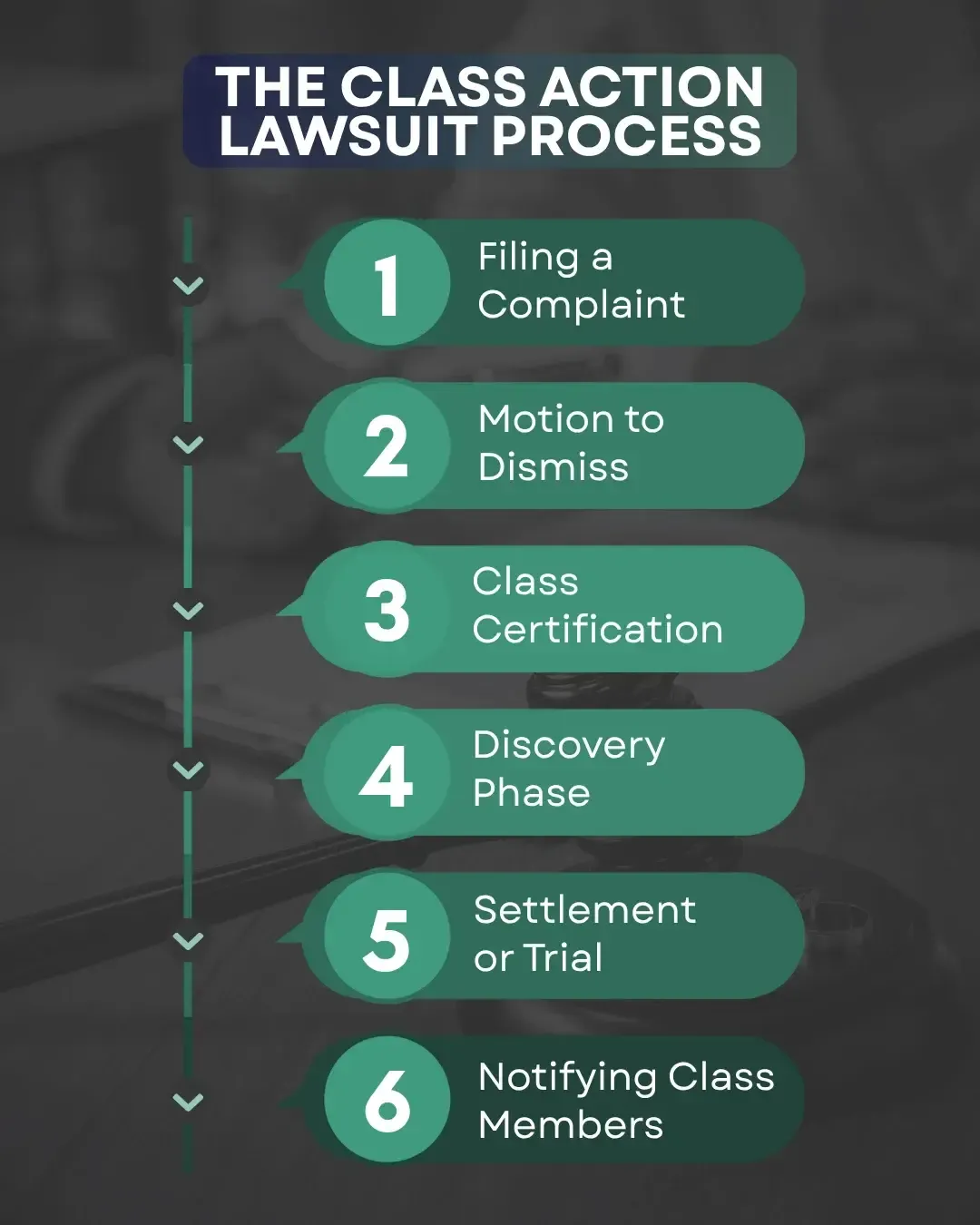
1. Filing a Complaint
The process begins when the plaintiff’s legal team files a complaint in court. This document outlines the alleged misconduct, supporting facts, and the relief sought, which may include monetary damages or injunctive relief.
The filing of the complaint officially initiates the lawsuit and sets the litigation process in motion.
2. Motion to Dismiss
After the complaint is filed, the defendant typically responds with a motion to dismiss, arguing that the case should not proceed due to legal reasons.
The court reviews whether the claims are sufficient to move forward. If the motion is denied, the lawsuit advances; if granted, the case may be dismissed entirely or in part.
3. Class Certification
Before a lawsuit can proceed as a class action, the court must certify the class. This means the judge determines whether the plaintiffs meet the legal requirements to represent the group, such as having common legal or factual issues and a sufficient class size.
This step is often heavily contested and can take months or even years, as both sides present evidence and arguments regarding certification.
4. Discovery Phase
Once the class is certified, both parties engage in discovery—the formal exchange of evidence.
Attorneys gather documents, depose witnesses, and build their arguments. Discovery can be lengthy, especially in cases involving vast amounts of data or numerous witnesses, and often sets the stage for settlement negotiations or trial proceedings.
5. Settlement or Trial
At any point after discovery, the parties may negotiate a settlement to avoid the risks and costs of trial. Settlement agreements must be submitted to the court for preliminary and final approval, ensuring fairness for all class members.
If a settlement is not reached, the case proceeds to trial, where a judge or jury decides the outcome.
Recent examples highlight this process. In 2024, Apple agreed to a $95 million settlement over claims related to its Siri virtual assistant, with class members notified and given a deadline to file claims. Further, in the House v. NCAA case, a $2.8 billion settlement was proposed, but it still required court approval and a formal notice period for class members.
6. Notifying Class Members
If a settlement or judgment is reached, eligible class members are notified.
Notices explain the terms, rights, and procedures for filing a compensation claim.
This step is essential for ensuring that all affected individuals have the opportunity to participate or opt out.
Factors Affecting the Length of a Class Action Lawsuit
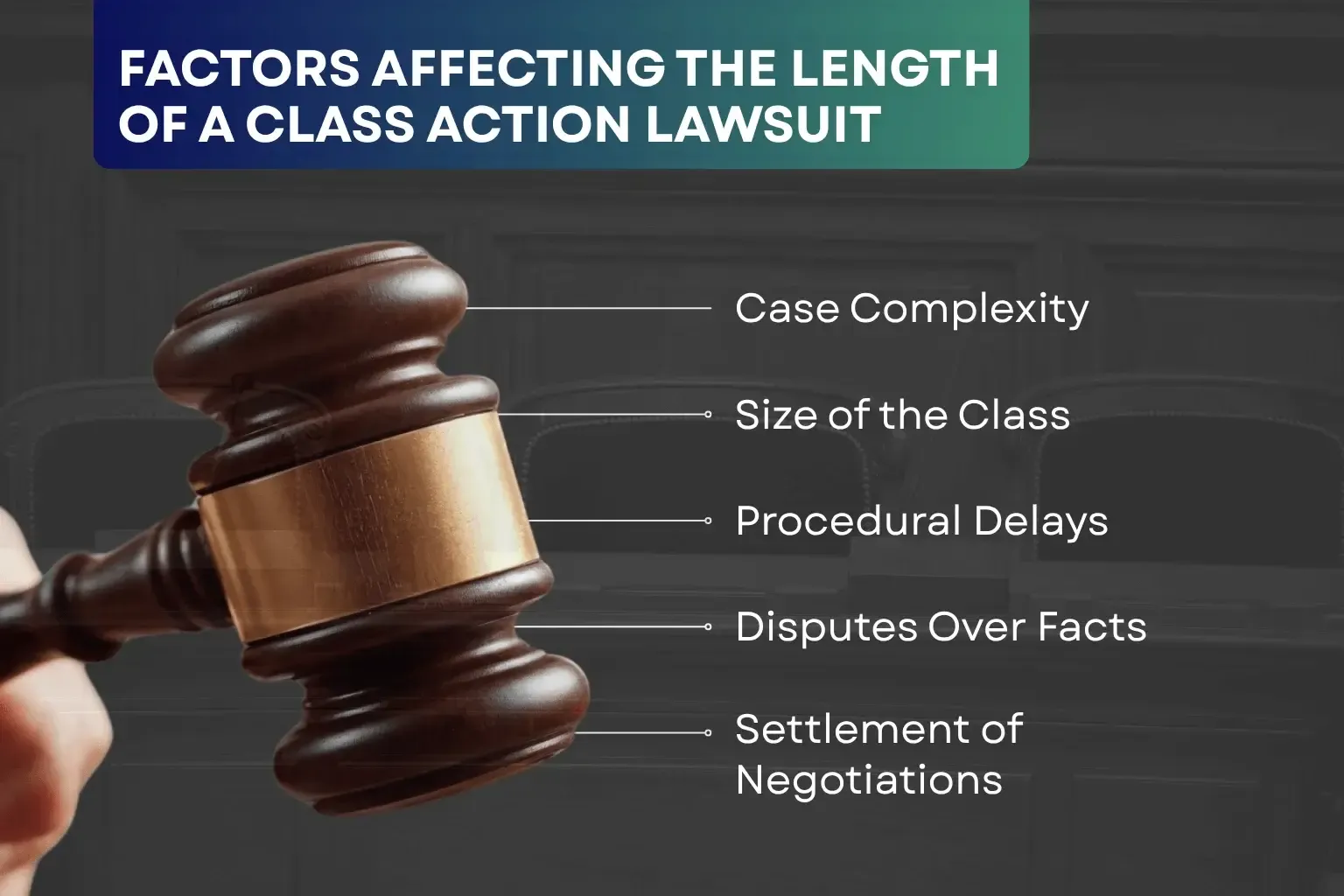
Several factors can influence how long a class action lawsuit takes:
- Case Complexity: More complex legal or factual issues require longer discovery and more extensive arguments.
- Size of the Class: Larger classes can slow down the notification and claims process.
- Procedural Delays: Court schedules, motions, and appeals can significantly add to the time.
- Disputes Over Facts: Disagreements over evidence or legal theories may require additional hearings or expert testimony.
- Settlement Negotiations: Protracted negotiations or mediation can extend the timeline, especially if parties are far apart on terms.
How Long Does a Class Action Lawsuit Typically Take?
There is no one-size-fits-all answer, but most class action lawsuits typically last between two and three years from the filing date to resolution.
Some may settle in under a year, while others, especially those involving appeals or complex discovery, can take a decade or more. It should be noted that class actions lawsuits settling in under a year is the exception to the timeline and not the standard.
For example, the Apple Siri settlement was resolved within a few years, with class members notified in 2025 and a deadline to file claims by July 2.
In contrast, the House v. NCAA litigation involves multiple lawsuits. It is expected to take several years from the initial filing to the final payout, with settlement approval and notification processes extending into 2025.
How Class Action Lawsuits Are Paid Out
If a class action lawsuit is successful, the court determines how the settlement or award is distributed:
- Distribution to Class Members: The settlement amount is divided among eligible class members, typically based on the degree of harm or involvement they suffered.
- Attorney’s Fees and Costs: Plaintiffs’ attorney fees are paid out of the settlement fund before distribution, while defendants usually pay their attorneys separately. The court may order the defendant to pay attorney’s fees and litigation costs.
- Incentive Awards: Lead plaintiffs may receive additional compensation for their role in representing the class.
For instance, in the House v. NCAA case, the settlement outlines a formula for distributing $2.8 billion in back-pay damages to athletes, with payments spread over ten years and varying by sport and participation.
What to Expect as a Class Member
As a class member, you may receive notice of the lawsuit and instructions on how to participate in the claims process.
You might be asked to provide documentation or information to support your claim.
Consulting with an attorney can help you understand your rights and options, including whether to accept a settlement or opt out to pursue individual action.
Financial Risks and Benefits
- Benefits: Class actions allow individuals to seek compensation without the expense of individual litigation.
- Risks: Settlements may be lower than what some individuals could win in separate lawsuits, and attorney fees reduce the total payout.
- Third-Party Litigation Funding: Increasingly, third-party funders are financing class actions in exchange for a share of any recovery, which can benefit plaintiffs but may also impact the distribution of proceeds.
Cost Structure
Most class action attorneys work on a contingency fee basis, meaning they only get paid if the case is successful.
Class members rarely pay out-of-pocket expenses, but it is worth noting that some indirect costs (e.g. time spent or documentation burdens) may occur. However, the attorney’s fees—often a percentage of the settlement—are deducted before funds are distributed.
Finding the Right Attorney for Your Class Action Lawsuit
If you are considering filing a class action, seek an attorney with experience in class action litigation and a proven track record. Evaluate their familiarity with relevant laws, fee structure, and communication style.
At Levi & Korsinsky, LLP, we specialize in investor class action lawsuits, representing shareholders and potential victims who have suffered financial losses due to securities fraud, corporate misconduct, and deceptive investment practices.
With over 80 collective years of experience, our experienced attorneys are on hand to provide you with the support and legal expertise you need to maximize your recovery.
Starting Class Action Lawsuits with Realistic Expectations
Class action suits are essential for addressing widespread harm and achieving justice for large groups.
However, they are complex and often lengthy, with timelines influenced by legal, procedural, and practical duration factors.
Understanding the process and setting realistic expectations can help plaintiffs and class members make informed decisions about their participation and maximize their potential recovery.